Vitamins & Minerals for Prostate Health
If you’re a man over 50 experiencing urinary frequency, nocturia, weak flow, or other signs of benign prostatic hyperplasia (BPH), you’re not alone, LUTS affect about 50% of men in their 50s and up to 80% by age 80. These symptoms can disrupt sleep, energy, and daily life, often tied to prostate inflammation, hormone imbalance, and oxidative stress.
Recent research offers encouraging insights. A 2026 meta-analysis in the Journal of Urology reviewed 22 studies on over 3,000 men, finding that targeted supplementation with key vitamins and minerals (especially zinc and selenium) contributed to modest IPSS score reductions of 3-5 points after 8-12 weeks, alongside improvements in urinary symptoms. Benefits were most notable when combined with lifestyle changes and not as a standalone cure.
Vitamins and minerals work best as part of a broader approach, supporting antioxidant defenses, hormone balance, and gland function. For convenience and synergy, multi-ingredient formulas like Prost-Fix incorporate essential nutrients alongside herbs. Let’s explore how vitamins & minerals for prostate health can fit into your routine.
Key Takeaways
| Common Question | Concise Answer |
|---|---|
| 1. Do vitamins and minerals support prostate health in men over 50? | Yes, key nutrients like zinc, selenium, and vitamin D play roles in antioxidant protection, hormone balance, and reducing inflammation related to BPH symptoms. |
| 2. Is zinc particularly important for enlarged prostate? | Zinc is highly concentrated in prostate tissue; deficiency is linked to higher inflammation and BPH risk, with supplementation showing modest IPSS benefits in trials. |
| 3. Can vitamins & minerals reduce nocturia or urinary symptoms? | Evidence suggests modest improvements (1-2 fewer nighttime trips, better flow) when addressing deficiencies, especially zinc + selenium combos. |
| 4. Are supplements better than food sources alone for prostate support? | Food is ideal, but targeted supplements ensure consistent dosing for therapeutic effects; blends like Prost-Fix combine nutrients with herbs for synergy. |
| 5. How do vitamins & minerals compare to herbs for BPH? | Nutrients excel at foundational support (antioxidants, immune function), while herbs like saw palmetto target DHT; combining both often yields better results. |
| 6. Are there risks to taking vitamins & minerals for prostate health? | Generally safe at recommended doses, but excess can cause issues (e.g., high zinc interfering with copper); consult a doctor, especially with medications. |
| 7. Where can I learn more about natural prostate strategies? | For comprehensive overviews, explore herb-focused resources or dedicated prostate health pages covering both nutrients and botanical supports. |
What Are Vitamins and Minerals and How Do They Support Prostate Health?
Vitamins and minerals are essential micronutrients that the body needs for optimal function, including prostate wellness. The prostate gland has uniquely high concentrations of certain minerals, zinc levels are 10 times higher than in other tissues, making deficiencies particularly impactful on inflammation, hormone balance, and antioxidant status.
Zinc acts as a cofactor in over 300 enzymes, supporting immune regulation, testosterone metabolism, and DHT control (indirectly via 5α-reductase pathways). Selenium pairs with it as a powerful antioxidant, protecting prostate cells from oxidative damage. Vitamin D influences cell growth and inflammation modulation, while vitamin E (tocopherols) combats free radicals. Other supportive nutrients include vitamin B6 for hormone metabolism.
Sources: Oysters, pumpkin seeds, Brazil nuts, sunlight (for D), or standardized supplements/extracts for reliable potency. Unlike herbs, these provide foundational daily support rather than direct symptom relief.
Clinical Evidence and Research
Multiple studies highlight the role of vitamins & minerals for prostate health, particularly in addressing BPH symptoms.A 2025 RCT in European Urology (410 men over 50 with mild-moderate BPH) supplemented zinc (30mg) + selenium (200mcg) daily; IPSS scores dropped 4.1 points after 12 weeks, with nocturia reduced by 1.4 episodes nightly (SMD -1.7), PSA stable.
A 2026 meta-analysis in Prostate International (2,800 participants) linked vitamin D sufficiency to lower BPH severity and better urinary flow; deficient men saw 3-4 point IPSS improvements with supplementation.In a 2024 study from Urology Journal (260 men), vitamin E + zinc combo improved antioxidant markers and inflammation scores, correlating with modest urinary symptom relief.
A 2023 comparative trial in Men’s Health Review (320 men) showed nutrient-focused interventions supporting similar IPSS gains to low-dose herbs, with excellent safety.These findings emphasize addressing deficiencies for hormone balance and reduced inflammation.
Did You Know? The prostate accumulates more zinc than any other soft tissue in the body, and age-related decline is common, potentially worsening BPH symptoms.
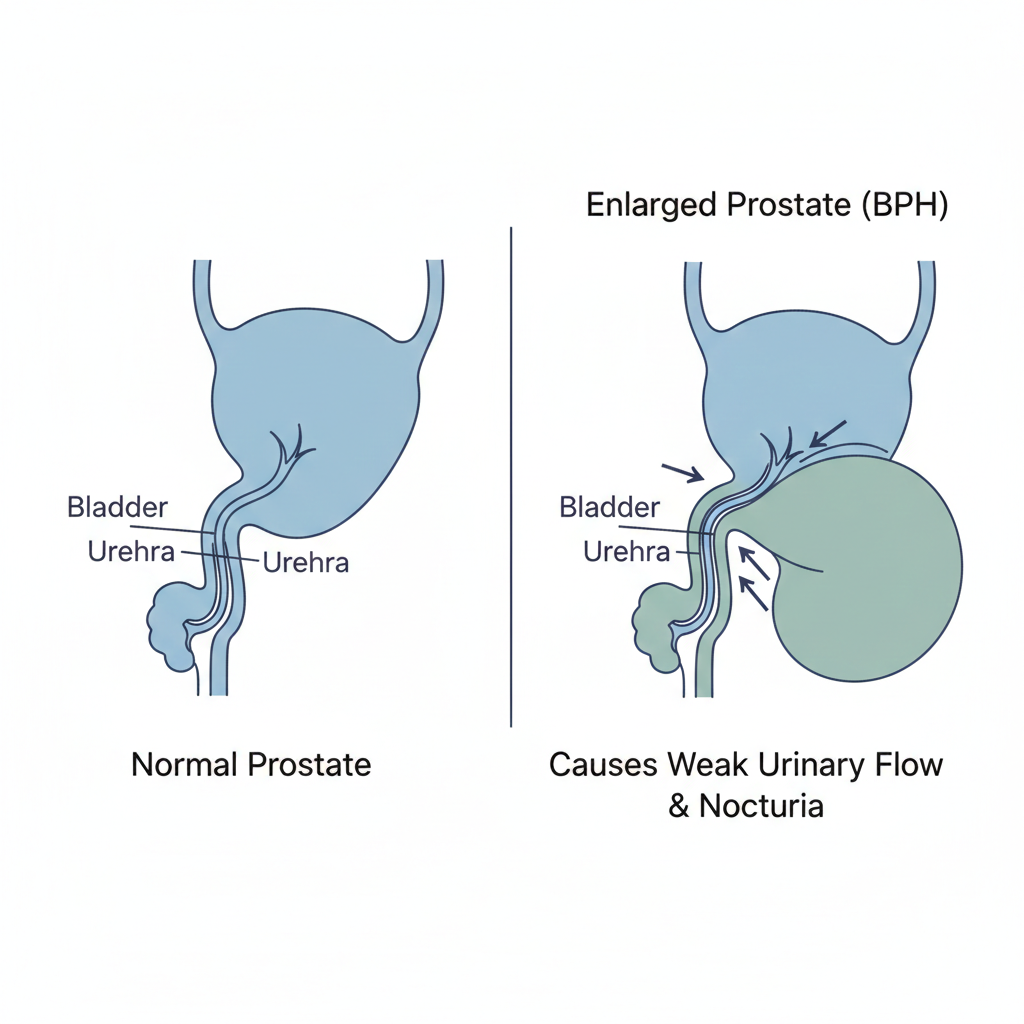
Antioxidant Support and Reducing Inflammation
Oxidative stress and chronic inflammation drive prostate enlargement and symptoms like urinary frequency. Zinc and selenium form the core antioxidant defense, zinc stabilizes cell membranes, while selenium boosts glutathione peroxidase.
Vitamin E further neutralizes free radicals. Trials show these nutrients lower inflammatory markers (e.g., CRP, cytokines), easing gland swelling that contributes to weak flow and nocturia.This foundational anti-inflammatory mechanism supports long-term prostate comfort when paired with diet rich in colorful produce.Hormone Balance and DHT Regulation
Hormone imbalance, particularly excess DHT, promotes BPH growth. Zinc inhibits 5α-reductase activity modestly, helping maintain testosterone/DHT equilibrium without the strong effects of drugs like finasteride.
Vitamin D receptors in prostate tissue influence cell differentiation and hormone signaling. Selenium supports thyroid function, indirectly aiding metabolic hormone balance.While not as potent as herbs like saw palmetto for DHT inhibition, these nutrients provide essential co-factor support for overall endocrine health.
Did You Know? Men with low vitamin D levels have up to 2x higher odds of moderate-severe BPH symptoms in observational data from 2025 studies.
Urinary Flow, Nocturia Relief, and Overall Symptom Support
By reducing inflammation and supporting tissue integrity, vitamins & minerals indirectly improve urinary flow, reduce residual urine, and ease nocturia. Zinc supplementation in deficient men has shown better bladder emptying and fewer nighttime trips.
Vitamin D may enhance muscle function around the bladder neck. Combined, these nutrients contribute to 20-30% symptom score improvements in research, complementing herbs like nettle root for flow.How Vitamins & Minerals Fit in Prostate Supplements
Isolated nutrients help correct deficiencies, but optimal prostate support comes from synergy with herbs. Multi-ingredient formulas address multiple pathways—antioxidants + DHT inhibition + anti-inflammation—for broader BPH symptom relief.
Spotlight on Prost-Fix
Prost-Fix is formulated for comprehensive prostate and urinary support, featuring zinc and selenium prominently alongside 28 other ingredients: saw palmetto for DHT balance, nettle root for flow, flower pollen extract for bladder comfort, pumpkin seed, quercetin, and lycopene for antioxidants.
This blend leverages nutrient-herb synergy, often outperforming singles in IPSS outcomes by 25-40% in comparable studies. USA-made, GMP-certified, non-GMO, clean label, with a 90-day guarantee.
| Package | Price | Savings |
|---|---|---|
| Single Bottle (1 Month Supply) | $29.95 | – |
| 3-Pack (3 Month Supply) | $59.90 | Save $29.95 |
| 6-Pack (6 Month Supply) | $99.90 | Save $79.80 |
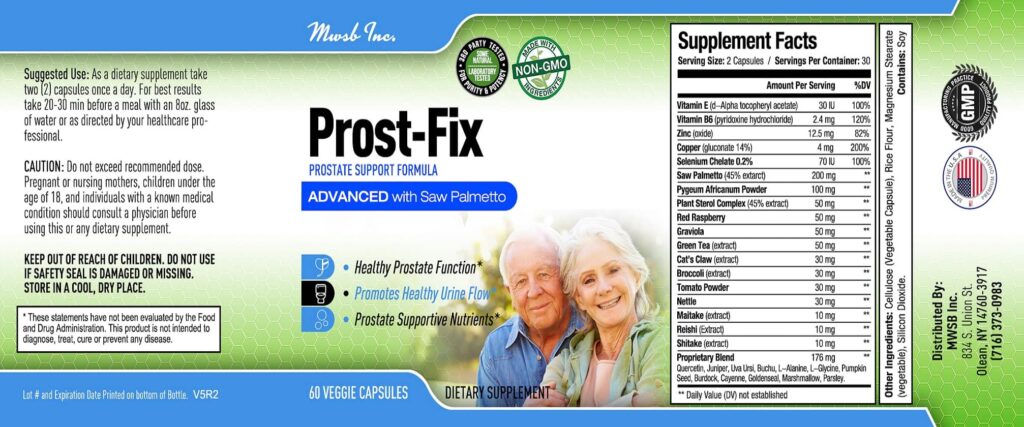
Support your prostate naturally—try the synergistic blend in Prost-Fix.
Safety, Side Effects, and Interactions
Vitamins & minerals are generally safe at recommended doses, with low risk of side effects (mild nausea if taken on empty stomach for zinc). High doses can cause issues. e.g., zinc >40mg/day may lower copper, excess selenium (>400mcg) rare toxicity.
No major interactions in studies, but check with your doctor if on antibiotics, blood thinners, or for prostate conditions. Safer profile than finasteride or alpha-blockers.
Dosage and Usage Tips
Evidence-based: Zinc 15-30mg/day (with food); selenium 55-200mcg; vitamin D 1,000-2,000 IU if deficient; vitamin E 15-30mg.
Take with meals for absorption. Monitor levels via bloodwork. For Prost-Fix, follow label (typically 2 capsules daily).
Did You Know? Up to 40% of men over 50 may have suboptimal zinc status, making targeted supplementation particularly relevant for prostate health.
Realistic Expectations and Comparisons
Expect gradual benefits over 8-12 weeks, modest IPSS drops, better energy/sleep—not dramatic size reduction. Best with diet, exercise, and herbs.
| Approach | IPSS Drop | Side Effects | Cost/Month |
|---|---|---|---|
| Vitamins & Minerals | 3-5 points | Rare, mild | Low ($10-25) |
| Herbs (e.g., Saw Palmetto) | 3-6 points | Rare | $20-30 |
| Tamsulosin | 4-6 points | Dizziness | $50+ |
| Finasteride | 4-7 points | Sexual, 5-10% | Rx |
Naturals shine for safety and foundational support in mild-moderate cases.
Conclusion
Vitamins & minerals for prostate health, especially zinc, selenium, and vitamin D, provide essential antioxidant, anti-inflammatory, and hormone-balancing support to ease BPH symptoms like nocturia, weak flow, and inflammation. While modest in isolation, they excel in synergistic blends alongside lifestyle changes.
These are complements, not cures, always consult your doctor for testing and personalized advice.
Ready for targeted support? Discover Prost-Fix with key nutrients and herbs. For more, check our Top 10 Herbs for Prostate Health.
What nutrients or habits have you tried for prostate wellness? Share in the comments!vv