Green Tea & Prostate Health: 10 Science-Backed Ways It May Help
More than 7 cups of green tea per day has been linked, in some studies, to a relative prostate cancer risk as low as 0.38 compared with low intake, yet major cancer organizations still say the overall evidence is mixed. That tension captures green tea’s role in prostate health: promising, but not a magic cure.
In this guide, we’ll walk through how green tea fits into an overall strategy for prostate support, how much is typically used in research, and how it can complement targeted prostate supplements and a prostate-friendly diet.
Key Takeaways
| Question | Answer |
| 1. Can green tea alone keep my prostate healthy? | Green tea offers antioxidant catechins that may support prostate health, but it works best as part of a broader plan that includes other herbs, minerals, and lifestyle changes. |
| 2. Does green tea prevent prostate cancer? | Evidence is mixed. Some trials and meta-analyses suggest potential benefits, while others show little or no effect. |
| 3. How does green tea compare with classic prostate herbs? | Green tea supports systemic antioxidant and metabolic health, while herbs like saw palmetto more directly target urinary symptoms. |
| 4. Should I combine green tea with minerals and vitamins? | Yes, many prostate formulas pair herbals with zinc, selenium and vitamins for broader support. |
| 5. Where does green tea fit into natural remedies? | Green tea sits alongside vegetables, healthy fats, and targeted herbs as one of several natural strategies. |
| 6. How important is diet with green tea? | Diet is foundational. A Mediterranean-style plan rich in plants, nuts, seeds, and healthy oils amplifies what green tea can offer. |
| 7. Can a formula like Prost‑Fix work alongside green tea? | Yes. A multi-ingredient supplement such as Prost‑Fix can complement daily green tea by supplying saw palmetto, nettle root, flower pollen, zinc and more. |
1. Why Green Tea Is on the Prostate Health Radar
Green tea has been consumed for centuries, but modern interest centers on its rich catechin content—especially EGCG (epigallocatechin gallate). These plant compounds act as antioxidants and may influence inflammation, hormone metabolism, and cellular signaling, all of which intersect with prostate health.
Several population studies suggest that men who drink more green tea may have lower prostate cancer risk, particularly in regions where green tea is consumed daily. At the same time, controlled clinical trials show mixed results, which is why experts recommend viewing green tea as one helpful tool rather than a stand‑alone treatment.
2. Green Tea Catechins: How They May Support the Prostate
The most studied components of green tea are catechins, especially EGCG, EGC, ECG, and EC. These compounds have been shown in lab and animal studies to modulate oxidative stress, influence cell growth, and interact with hormone-related pathways involved in prostate tissue turnover.
In men, small human trials suggest these catechins may help modestly reduce PSA levels or affect early cellular changes in high‑risk groups. However, the effects are not large or universal, which is why green tea is often positioned as a gentle, long‑term support rather than a quick fix for urinary symptoms.

3. What the Research Really Says About Green Tea & Prostate Cancer Risk
Human data on green tea and prostate cancer are nuanced. Some observational studies report lower risk in high green‑tea‑consuming populations, especially in East Asia. A dose‑response meta‑analysis even found that more than seven cups per day was associated with a relative risk of about 0.38 compared with low intake, although that level of consumption is not realistic or necessary for most men.
Randomized controlled trials offer a stricter test. One placebo‑controlled trial of green tea catechins in men at increased risk for prostate cancer found a 1‑year prostate cancer incidence of 5 of 49 in the green‑tea group compared with 9 of 48 in the placebo group—suggesting only a modest difference overall.
4. Green Tea and PSA Levels: What Men Need to Know
PSA (prostate‑specific antigen) is a blood marker often used to monitor prostate changes. A systematic review and meta‑analysis looking at green tea interventions found an overall mean PSA difference of about -0.60 ng/mL compared with control, with somewhat greater reductions reported in U.S.-based studies than in non‑U.S. settings.
This suggests that green tea may have a modest PSA‑lowering effect for some men, although the change is not dramatic. Importantly, any PSA shift, up or down, still requires clinical interpretation.
Did You Know?
A systematic review and PSA-focused meta-analysis found an overall mean PSA difference of -0.60 ng/mL with green tea interventions, with U.S. trials showing larger average PSA drops than non-U.S. populations.
5. How Much Green Tea? Doses and Cups Used in Studies
Most clinical trials do not rely on brewed cups alone; they use standardized green tea extracts so the catechin dose is clear. One notable trial used 400 mg per day of green tea catechins in capsule form, often referred to as a PolyE (polyphenon E) extract.
| Form | Typical Amount | Notes |
| Brewed green tea | 2–4 cups per day | Gentle, hydrating; catechin content varies by brand and steeping time. |
| Standardized extract | Up to ~400 mg catechins/day | Used in research; higher potency, better for consistent dosing. |
6. Green Tea vs. Classic Prostate Herbs: Different Tools, Different Roles
When we talk about “herbs for prostate health,” men often think of saw palmetto, nettle root, or flower pollen extracts first. These botanicals are chosen for their direct effects on urinary flow, nocturnal frequency, and hormone signaling.
Green tea, in contrast, works more broadly. It supports antioxidant capacity and metabolic balance—factors that influence long‑term prostate resilience but may not immediately change how often you wake up at night.
- Saw palmetto: Traditionally used for urinary flow and comfort.
- Nettle root: Supports hormone balance and urinary function.
- Green tea: Adds antioxidant and metabolic support.
7. Combining Green Tea with a Prostate-Friendly Diet
Green tea fits naturally into a Mediterranean‑style diet: lots of vegetables and fruits, healthy fats from fish and olive oil, and modest intake of sugar. Practical ways to integrate it include swapping sugary drinks for unsweetened tea or pairing a cup with lycopene‑rich tomatoes at lunch.
Did You Know?
National Cancer Institute guidance notes there is not enough evidence to conclude that green tea prevents or treats prostate cancer, emphasizing that it, should be viewed as supportive, not curative.
8. How Green Tea Can Complement a Targeted Formula Like Prost‑Fix
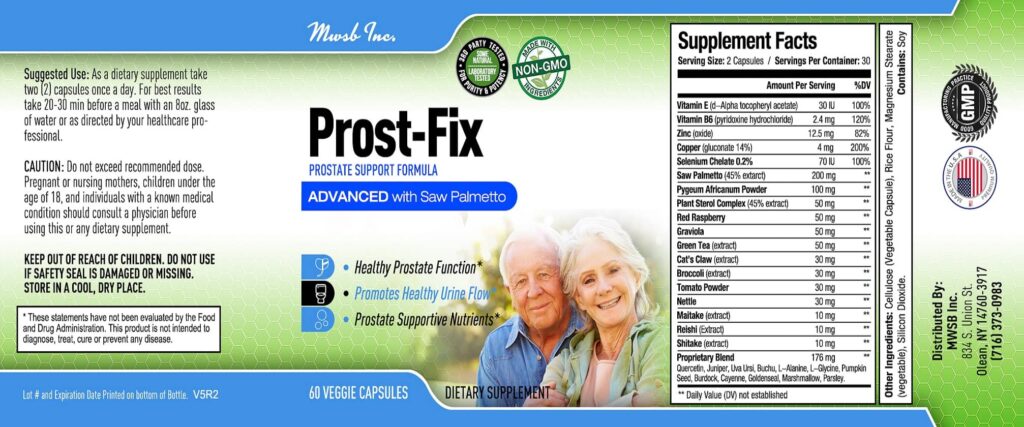
While green tea offers systemic benefits, a focused supplement can support the urinary tract more directly. A formula like Prost‑Fix is built around saw palmetto, Cernitin flower pollen extract, nettle root, pumpkin seed extract, zinc, selenium, and vitamin B6 to target urinary comfort and bladder emptying.
9. Safety, Side Effects, and When to Be Cautious
For most men, 2-4 cups of tea is well tolerated. Potential side effects typically relate to caffeine—such as jitteriness or insomnia.
- Introduce tea gradually if you are caffeine‑sensitive.
- Avoid large amounts late in the day to protect sleep.
- Discuss extracts with your provider, especially if you have liver, kidney, or heart concerns.
10. Practical Daily Routine: Using Tea as Part of a Prostate Plan
| Time | Habit | Prostate‑Relevant Benefit |
| Morning | 1 cup tea with breakfast | Hydration, antioxidants, healthy blood sugar response. |
| Mid‑day | Second cup with a tomato-rich lunch | Combines catechins with lycopene and fiber. |
| With meals | Take a prostate‑focused supplement | Targets urinary comfort and hormone balance. |
| Evening | Limit fluids 2–3 hours before bed | Helps minimize nighttime bathroom trips. |
Conclusion
Green tea earns its place in prostate health discussions. Its catechins show promising effects on PSA levels and long‑term risk markers. However, the most reliable strategy remains comprehensive: regular check‑ups, a plant‑forward diet, weight management, and targeted supplements.