Saw Palmetto for Prostate Health: Benefits, Dosage, Side Effects & Best Ways to Use It
Benign prostatic hyperplasia (BPH), or enlarged prostate, is a common condition among men over 50, affecting urinary function and quality of life. Symptoms include weak urine stream, frequent urination (especially at night, known as nocturia), urgency, incomplete bladder emptying, and discomfort. As men seek natural alternatives to medications like alpha-blockers or 5-alpha-reductase inhibitors, saw palmetto remains one of the most popular herbal options.
Extracted from the berries of a small palm tree native to the southeastern United States, It has been used traditionally for urinary issues for centuries. It is rich in fatty acids (such as lauric acid) and phytosterols (including beta-sitosterol), which are believed to influence prostate health pathways.
Despite this, its excellent safety profile and traditional use keep it relevant, particularly in multi-ingredient formulas like Prost-Fix that combine it with complementary herbs and nutrients for broader support. This article explores the evidence, mechanisms, dosing, and realistic integration into a prostate health plan.
1. What Makes Saw Palmetto a Traditional Option for Prostate Health?
Saw palmetto extract is standardized to 85-95% fatty acids and sterols, targeting potential hormone balance and inflammation in the prostate gland. Native Americans historically used the berries for urinary and reproductive concerns, and it became popular in Europe as a natural remedy for BPH.
For men experiencing mild to moderate LUTS, it is positioned as a complementary approach, potentially easing nighttime disruptions or flow issues, though it does not shrink the prostate significantly. Recent evidence tempers expectations: high-certainty reviews show minimal standalone effects, but it remains appealing for those prioritizing natural, well-tolerated options over pharmaceuticals.
Did You Know? Saw palmetto has been a staple in prostate supplements for decades, with traditional use spanning over 200 years—yet modern large-scale trials highlight the importance of realistic expectations.
2. Science-Backed Benefits of Saw Palmetto for BPH and Urinary Symptoms
Research on saw palmetto spans decades but yields mixed results, with stronger studies showing limited efficacy:
- Symptom Score Changes: Smaller trials occasionally report IPSS reductions of 3-5 points, but meta-analyses (including 2023 Cochrane high-certainty evidence) find little difference from placebo.
- Urinary Flow Improvement: Some studies note slight Qmax increases (2-3 mL/s), but large reviews conclude no meaningful benefit.
- Nocturia and Frequency Reduction: Mixed findings; certain older trials suggested fewer nighttime trips, but recent data show no reliable advantage.
- Quality of Life and Overall Comfort: High-certainty evidence indicates little to no improvement compared to placebo after 3-6 months or longer.
A 2023 Cochrane review (27 studies, over 4,600 participants) determined palmetto results in little to no difference in urologic symptoms or quality of life. Some smaller or combination-focused studies hint at value in blends, but standalone use offers modest or no consistent relief.
3. How Saw Palmetto Works: Proposed Mechanisms for Prostate and Urinary Support
Proposed actions include mild inhibition of 5-alpha-reductase (reducing DHT from testosterone, a factor in prostate growth), anti-inflammatory effects, and relaxation of urethral smooth muscle for better flow. Beta-sitosterol may reduce swelling around the urethra. However, clinical trials show these mechanisms do not produce significant symptom relief beyond placebo in most rigorous settings.
4. Clinically Studied Doses of Saw Palmetto
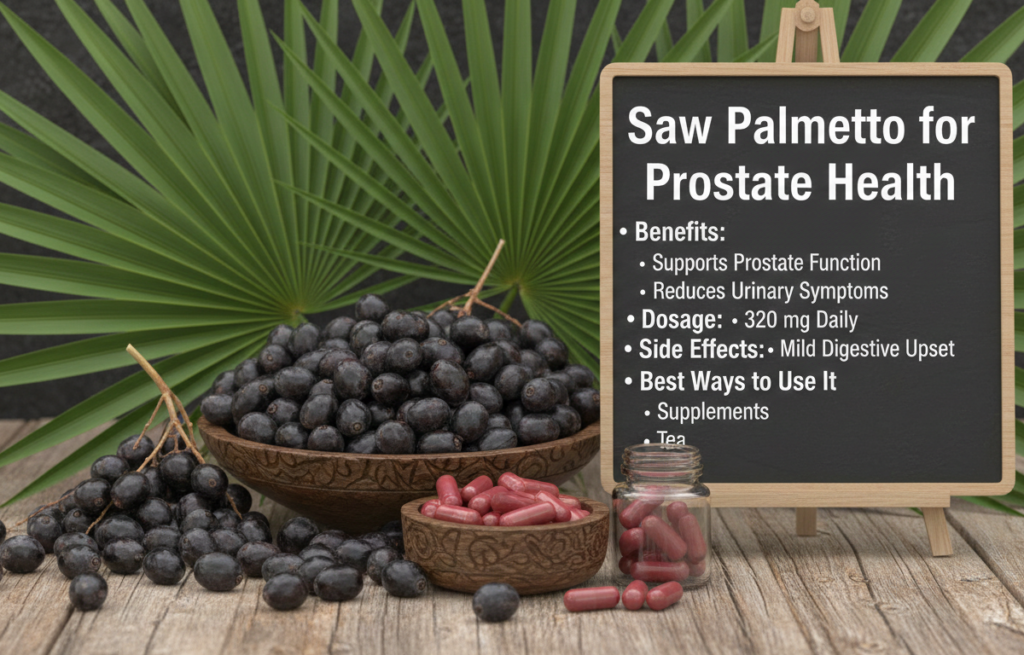
The standard dose in trials is 320 mg daily of standardized liposterolic extract (85-95% fatty acids/sterols), often 160 mg twice daily or once daily, taken with food to minimize mild digestive upset. Higher doses (up to 960 mg) have been tested without added benefit. Effects, if present, build over 4-12 weeks. In comprehensive formulas like Prost-Fix, palmetto is included at thoughtful levels alongside other ingredients for potential synergy.
5. Saw Palmetto vs Other Herbs for Prostate Health
| Herb | Primary Focus | Saw Palmetto Edge/Combo Benefit |
| Nettle Root | Reducing inflammation, supporting fluid balance and urinary frequency | Frequently combined for potentially enhanced symptom relief in blends; nettle complements hormone-related effects. |
| Pygeum Bark | Improving urinary flow, reducing nocturia | Similar modest evidence base; saw palmetto adds more DHT-focused historical data; both support long-term tolerability. |
| Pumpkin Seed Oil | Bladder comfort, phytosterols for inflammation | Saw-palmetto emphasizes hormone modulation; pairing in formulas broadens urinary tract support. |
Saw palmetto’s strength lies in tradition and safety, but it performs best alongside other herbs in multi-pathway approaches.
6. Saw Palmetto in Comprehensive Formulas: Spotlight on Prost-Fix
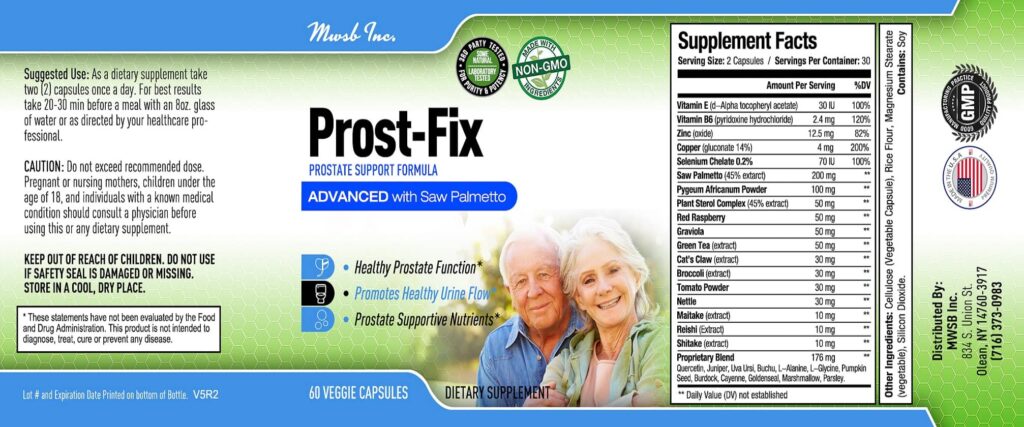
Standalone saw palmetto has limited evidence for significant BPH relief, prompting many men to choose multi-ingredient supplements that address various aspects of prostate health. Prost-Fix features saw-palmetto alongside flower pollen extract (including rye pollen/Cernitin blend), nettle root, pumpkin seed, quercetin, zinc, selenium, and vitamin B6.
This combination targets urinary flow, inflammation reduction, hormone balance, antioxidant protection, and overall prostate comfort in a simple once-daily (or as directed) capsule format.
Manufactured in the USA in cGMP-compliant facilities, third-party tested, non-GMO, gluten-free, and free of artificial colors, it starts at $29.95 for a 30-day supply (with savings on multi-bottle options like 3 bottles for $59.90) and includes a 90-day money-back guarantee.
7. Expected Timeline: How Long Before Saw-Palmetto Helps?
Subtle changes, if any, might emerge in 4-8 weeks for responsive individuals, but high-certainty evidence shows little overall difference from placebo even after 3-6 months or extended use. Monitor symptoms realistically, standalone benefits are often minimal, making consistency and combination approaches more practical.
8. Safety, Side Effects, and Who Should Avoid
Saw palmetto is well-tolerated in studies up to 3 years, with mild side effects (headache, nausea, dizziness, digestive upset) rare (<5%). No major drug interactions or PSA interference noted in reviews. Avoid if allergic to palms or using hormone therapies/blood thinners without medical advice. Consult a healthcare provider, especially with BPH medications or pre-existing conditions.
9. How to Choose a Quality Product or Formula
Prioritize standardized extracts (85-95% fatty acids/sterols), third-party testing, clear labeling, and non-GMO status. Softgels aid absorption better than powders. Blends like Prost-Fix offer convenience by consolidating ingredients with quality assurance (USA-made, GMP-certified).
10. Integrating Palmetto into a Complete Prostate Health Plan
Incorporate regular physical activity for circulation, an anti-inflammatory diet (rich in tomatoes for lycopene, green tea, healthy fats), weight management, adequate hydration, and routine check-ups (including PSA monitoring). Use palmetto or Prost-Fix as part of this holistic strategy, never replacing professional medical evaluation for sudden or severe symptoms.
Conclusion
Saw palmetto continues to attract interest for prostate health due to its long history, favorable safety, and inclusion in traditional remedies, but high-quality evidence from recent reviews shows it offers little to no meaningful benefit for BPH symptoms or urinary function when used alone compared to placebo.
In comprehensive formulas like Prost-Fix, palmetto pairs effectively with nettle root, pumpkin seed, flower pollen extract, quercetin, zinc, selenium, and vitamin B6 to provide multi-pathway support for urinary comfort, inflammation management, and overall prostate wellness in one easy daily regimen. For optimal results, combine consistent use with lifestyle habits and regular healthcare provider discussions to support proactive prostate care.
Key Takeaways
| Question | Answer |
| What is saw palmetto’s main role in prostate health? | Standardized extract rich in fatty acids and phytosterols, traditionally used for urinary and BPH symptom support, though recent evidence shows limited standalone benefit. |
| Does saw palmetto work for BPH symptoms? | High-certainty reviews (e.g., 2023 Cochrane) find little to no improvement in IPSS, urinary flow, or quality of life vs. placebo; modest effects possible in some smaller studies or blends. |
| Best dosage? | 320 mg daily of standardized liposterolic extract (85-95% fatty acids), often 160 mg twice daily or once daily, for at least 2-3 months in studies. |
| Safe for long-term? | Well-tolerated up to 3 years with mild, infrequent side effects (e.g., headache, nausea); consult doctor for interactions or hormone concerns. |
| Pairs well with? | Herbs like nettle root, pygeum, pumpkin seed oil; comprehensive formulas like Prost-Fix combine it with zinc, selenium, quercetin, and more for broader support. |