Pygeum Bark for Prostate Health: Benefits, Dosing, Side Effects & Best Ways to Use It
Pygeum bark (from Prunus africana) has been used for decades in Europe to support men with enlarged prostates and frequent urination. In one large clinical trial, 66% of men treated with Pygeum africanum extract showed overall improvement in urination symptoms, compared with only 31% taking placebo – a striking difference that has kept this herb in the spotlight for benign prostatic hyperplasia (BPH) support.
Key Takeaways
| Question | Answer |
| 1. What is Pygeum bark and why is it used for prostate health? | Pygeum bark is an extract from the African plum tree used to support men with enlarged prostates and urinary symptoms such as nighttime urination and weak flow. It’s often discussed alongside other herbs for prostate health like saw palmetto and nettle root. |
| 2. Does Pygeum really work for BPH symptoms? | Clinical trials and reviews suggest Pygeum can modestly improve urinary flow, reduce nighttime trips, and lessen incomplete emptying. It is frequently included in multi-ingredient supplements highlighted in natural prostate health remedies. |
| 3. How is Pygeum usually taken? | Most research uses standardized extracts in capsule form, not raw bark tea. Pygeum is commonly combined with other ingredients in comprehensive formulas like Prost-Fix, designed to support urinary comfort and prostate function. |
| 4. How long before I notice results from Pygeum? | Some men report improvement within a few weeks, but studies often run for several months. Quality guides emphasize consistent daily use and realistic expectations. |
| 5. Is Pygeum safe to use long term? | Trials report mostly mild side effects, such as occasional digestive upset. A cautious, long‑term approach that also addresses diet, lifestyle, and regular checkups is recommended. |
| 6. Should I use Pygeum alone or in a blended formula? | Combination formulas can target multiple pathways at once. Blends often pair botanicals like Pygeum, saw palmetto, and nettle with key vitamins and minerals. |
| 7. Where does Pygeum fit in an overall prostate health plan? | Pygeum is an herbal tool that works best when combined with lifestyle strategies, nutrient support, and regular medical oversight. |
1. What Is Pygeum Bark and How Does It Support Prostate Health?
Pygeum bark comes from the African cherry (or African plum) tree, Prunus africana, a species native to high-altitude regions of Africa. Traditional practitioners used the bark to support bladder comfort and ease difficulties with urination in older men.
Modern extracts concentrate the bark’s phytosterols (such as beta‑sitosterol), fatty acids, and antioxidant compounds. These constituents are thought to support a healthy inflammatory response in the prostate, ease swelling around the urethra, and promote more complete bladder emptying.
2. Science-Backed Benefits of Pygeum Bark for BPH and Urinary Symptoms
Research on Pygeum focuses mainly on men with benign prostatic hyperplasia (BPH), a non‑cancerous enlargement of the prostate that can cause frequent urination, weak stream, and nighttime waking. Controlled trials and meta-analyses have shown that standardized Pygeum extracts can modestly improve these symptoms compared with placebo.
Reported benefits include:
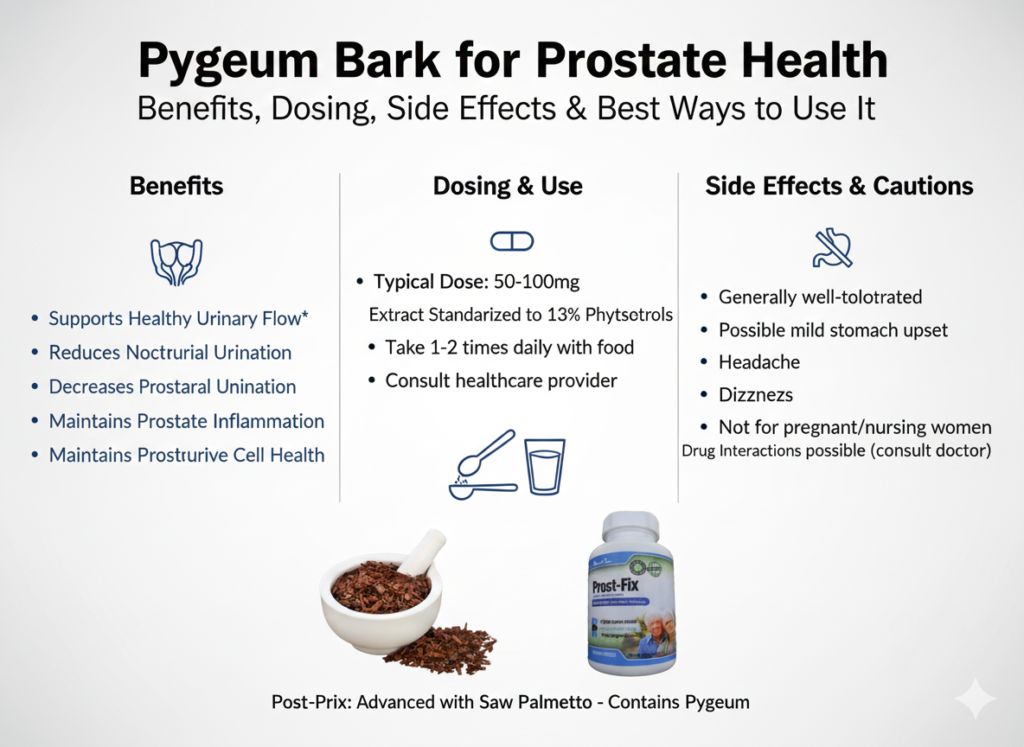
- Reduced nighttime trips to the bathroom (nocturia)
- Improved urinary flow rate
- Less sensation of incomplete emptying
- Lower International Prostate Symptom Score (IPSS) values over time
3. How Pygeum Bark Works: Inflammation, Hormones, and Bladder Function
Pygeum extracts appear to act through several complementary mechanisms. Lab and clinical data suggest they may help moderate the activity of growth factors and inflammatory mediators that contribute to prostate enlargement and edema around the urethra.
At the same time, Pygeum may influence pathways involved in testosterone metabolism and support the smooth muscle tone of the bladder and urethra. The net effect for many men is easier starting and stopping of the urine stream and less urgency.
Did You Know? Across four randomized controlled trials, Pygeum africanum increased peak urinary flow rate by about 23% (roughly 2.5 mL/s) over placebo, showing measurable improvements beyond symptom questionnaires.
4. Clinically Studied Doses of Pygeum Bark (and What That Means for You)
Most clinical trials use standardized Pygeum bark extracts, not crude powders. Common regimens include 50–100 mg of extract, usually standardized to around 13% total sterols, taken once or twice daily with meals.
In a dose-comparison study, men taking 50 mg twice daily or 100 mg once daily experienced similar improvements (about a 35–38% drop in IPSS after two months). For everyday use, this means that a well‑formulated supplement can reasonably offer either schedule while aiming for research‑backed potency.
5. Pygeum Bark vs Other Herbs for Prostate Health
Pygeum rarely appears alone in modern prostate formulas. It’s often paired with other science‑backed botanicals that support urinary comfort and hormone balance, such as saw palmetto, nettle root, pumpkin seed, and flower pollen extract.
Each herb tackles a slightly different piece of the puzzle: saw palmetto for hormonal pathways, nettle for inflammation and fluid balance, and Pygeum for improving flow and reducing residual urine.
| Herb | Primary Focus | Typical Use in Formulas |
| Pygeum Bark | Flow rate, residual urine, nighttime urination | Usually combined with other herbs and nutrients |
| Saw Palmetto | DHT modulation, prostate size | Found in most comprehensive prostate formulas |
| Nettle Root | Inflammation, urinary comfort | Compliments saw palmetto and Pygeum |
6. Pygeum Bark in Comprehensive Formulas: Spotlight on Prost‑Fix
Why Many Men Choose a Multi‑Ingredient Formula
Because prostate health involves hormones, circulation, inflammation, and muscle tone, many men prefer a comprehensive daily formula instead of single‑herb capsules. Multi‑ingredient supplements can combine multiple clinically informed dosages into one or two convenient capsules per day.
Prost‑Fix: Research‑Focused Prostate & Urinary Support
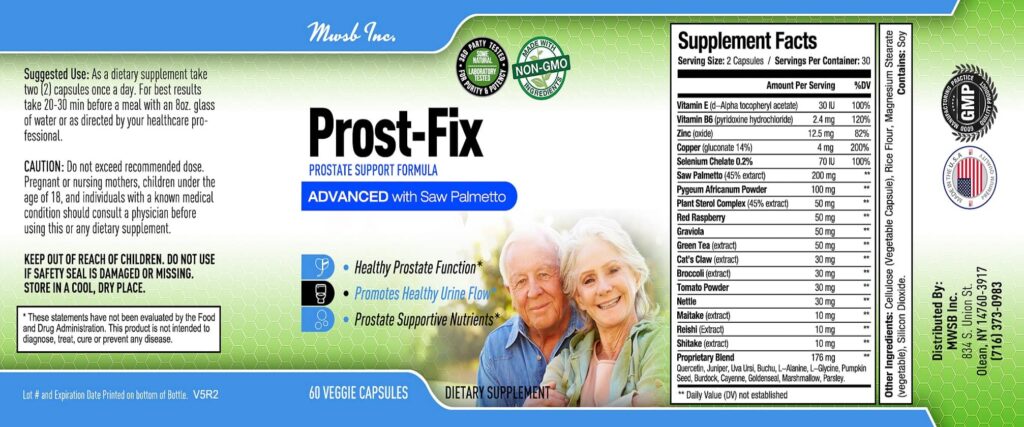
Prost‑Fix is a flagship prostate support formula from Top Value Supplements™. Key features include:
- Clinically styled ingredients such as saw palmetto, flower pollen extract, nettle root, and pumpkin seed.
- Supportive nutrients like zinc, selenium, vitamin B6, and quercetin.
- Manufactured in the USA in an FDA‑ and GMP‑certified facility.
7. Expected Timeline: How Long Before Pygeum Bark Helps?
Clinical trials of Pygeum bark extracts vary in length from a few weeks to a full year. Many men notice initial improvements within 4–8 weeks, such as fewer nighttime awakenings and easier starting of the stream.
Longer studies show continued symptom reductions over 6–12 months, with some men moving from “moderate” symptom levels into the “mild” range on standardized scoring tools. Consistent, daily use appears to be key for maintaining these gains.
Did You Know? In a 12‑month study of Pygeum Africana, the average International Prostate Symptom Score dropped from 16 to 9 (about a 46% reduction), while maximum urinary flow (Qmax) improved by roughly 15%.
8. Safety, Side Effects, and Who Should Avoid Pygeum Bark
Across clinical studies, Pygeum bark extracts have shown a favorable safety profile, with adverse events typically mild and similar to placebo. The most commonly reported issues are brief digestive upset, such as stomach discomfort or nausea.
However, Pygeum is not right for everyone. Men with known allergies to cherry or related species, those on complex medication regimens, or anyone with significant kidney, liver, or cardiovascular disease should discuss Pygeum with a healthcare professional before use.
9. How to Choose a Quality Pygeum Product or Formula
Not all Pygeum supplements are created equal. When comparing options, look for:
- Clear labeling of Pygeum extract and standardized sterol content.
- Manufacturing in FDA‑ and GMP‑certified facilities.
- Transparent ingredient lists and rational dosages.
- Allergen‑free, non‑GMO, or vegetarian capsules.
10. Integrating Pygeum Bark into a Complete Prostate Health Plan
Pygeum bark works best as one component of a broader strategy. Practical steps include:
- Following a balanced diet rich in vegetables and healthy fats.
- Maintaining an active lifestyle to support circulation.
- Using a research‑informed prostate formula daily.
- Working with your healthcare provider to track PSA levels and urinary symptoms.
Conclusion
Pygeum bark is one of the most studied herbal allies for men facing urinary issues related to prostate enlargement. Whether you choose a stand‑alone products or a comprehensive formula like Prost‑Fix, the keys are quality, consistent use, and partnership with your healthcare provider.
Would you like me to help you draft a specific daily schedule or lifestyle checklist to go along with this supplement plan?