Natural Approach to Reduce Prostate Size
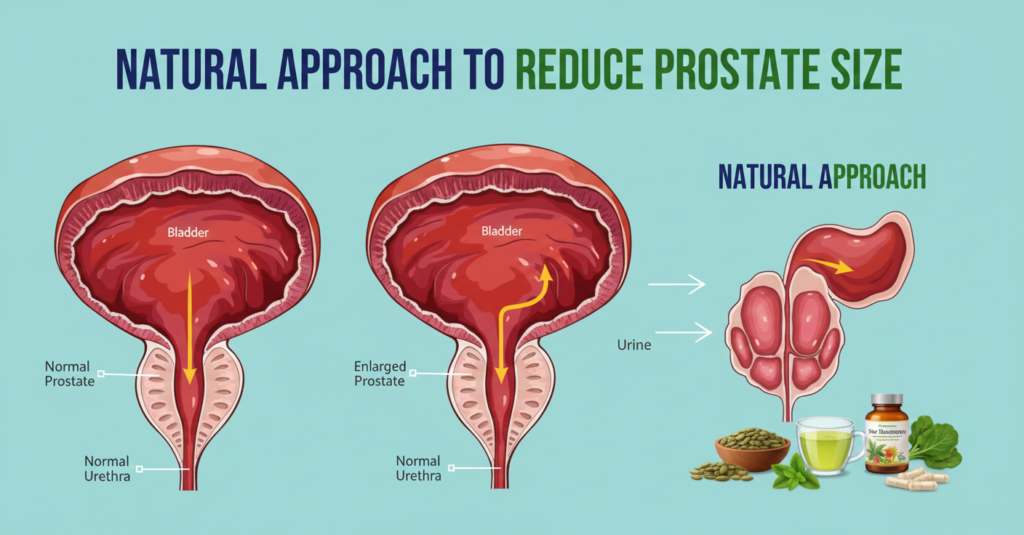
For men experiencing frequent nighttime bathroom trips, weak urinary stream, or constant feeling of incomplete bladder emptying, the question “Can I actually reduce prostate size naturally?” is deeply personal. While pharmaceutical interventions exist, many men prefer exploring natural approaches first, particularly when symptoms are mild to moderate.
The encouraging news: substantial research demonstrates that dietary changes, targeted botanicals, and lifestyle modifications can meaningfully influence gland dimensions and reduce prostate size while improving symptoms that impact daily life.
Understanding What Drives Enlargement
Hormonal Imbalances: The Primary Driver
DHT accumulation: Dihydrotestosterone (DHT) stimulates gland tissue growth. As men age, DHT continues accumulating even as overall testosterone declines, a key factor in gland enlargement.
Estrogen dominance: Testosterone drops ~1% annually after 40, while estrogen remains stable or increases (especially in overweight men). This shifting ratio promotes tissue proliferation, affecting prostate size.
Insulin and growth factors: Insulin resistance and elevated IGF-1 stimulate cell division and tissue expansion.
Inflammation: The Accelerator
Chronic inflammation drives tissue swelling, promotes cellular proliferation, and worsens symptoms independent of actual prostate size. Many men have significant symptoms despite modest enlargement because inflammation amplifies obstruction.
Dietary Strategies That Influence Prostate Size
Foods That Help
Tomatoes: Cooked tomatoes concentrate lycopene. Population studies link higher lycopene intake with smaller gland volumes. Aim for 10+ servings weekly.
Cruciferous vegetables: Broccoli, cauliflower, and kale provide sulforaphane, supporting healthy estrogen metabolism. Target 4-5 servings weekly.
Fatty fish: Salmon and mackerel deliver anti-inflammatory omega-3s. Men consuming fish 2-3 times weekly have smaller dimensions than those eating fish rarely.
Pumpkin seeds: Rich in zinc, plant sterols, and essential fatty acids. Regular consumption shows better urinary flow and modest effects on prostate size.
Foods to Minimize
Red and processed meats: High consumption correlates with larger dimensions. Dairy products: Excessive intake shows associations with enlargement. Refined carbohydrates: Drive insulin resistance and inflammation. Alcohol: Particularly beer, which contains phytoestrogens.
Botanical Compounds with Evidence for Reducing Prostate Size
Saw Palmetto
Evidence on size: Mixed results. Some trials show modest 5-10% reductions over 6-12 months. Evidence on symptoms: More consistent benefits for urinary symptoms, even when imaging doesn’t show dramatic size changes. Dose: 320mg daily of standardized extract.
Beta-Sitosterol: Strongest Evidence
Evidence on size: Multiple trials show 10-15% reductions in volume over 6-12 months.
Evidence on symptoms: IPSS scores improve by 4-5 points. Peak urinary flow increases 3-4 mL/second, functional improvements often exceed what size reduction alone would predict.
Dose: 60-130mg daily of plant sterol complex.
Pygeum Africanum
Evidence on size: Modest 5-10% reductions alongside substantial symptom improvements.
Evidence on symptoms: Meta-analyses show 38% improvement in IPSS at 2 months, 46% at 12 months. Urinary flow increases by ~15%.
Dose: 100-200mg daily of standardized extract.
Stinging Nettle Root
Evidence on size: Limited direct evidence on volume reduction, but studies show tissue composition changes.
Evidence on symptoms: Significant improvements in flow, frequency, and nocturia. Often combined with saw palmetto.
Dose: 120-300mg daily.
Spotlight on Prost-Fix: Comprehensive Natural Support for Reducing Prostate Size
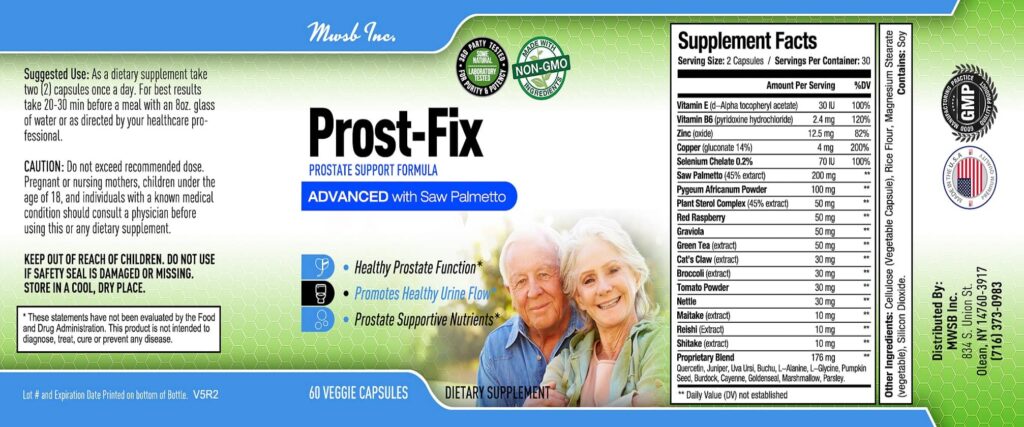
Prost-Fix combines 30 ingredients at clinically studied doses to address multiple factors influencing gland dimensions and urinary symptoms, providing a practical way to implement research on reducing prostate size naturally.
Six Pathways Targeting Prostate Size
Pathway 1: Hormone Metabolism — Saw palmetto (320mg), beta-sitosterol (60mg), nettle root (300mg) modulate DHT production and activity, support healthy estrogen metabolism, and influence androgen receptors. This addresses hormone imbalances driving increased prostate size.
Pathway 2: Inflammation Reduction — Quercetin (500mg), pomegranate (200mg), turmeric (50mg), green tea provide anti-inflammatory effects through different mechanisms. Reducing inflammation often produces noticeable improvements in frequent urination even before measurable size reductions occur.
Pathway 3: Antioxidant Protection — Selenium (200mcg), vitamin E (100 IU), lycopene (15mg) protect against oxidative stress that damages tissue and promotes abnormal cellular proliferation—helping create conditions less permissive for continued increases in prostate size.
Pathway 4: Essential Nutrition — Zinc picolinate (15mg) addresses depletion common in enlarged glands. Vitamin B6 as P5P (10mg) supports hormone metabolism. Vitamin D3 (1000 IU) influences cell differentiation. These foundational nutrients support healthier tissue function.
Pathway 5: Direct Urinary Function Support — Amino acid complex (L-alanine, glycine, L-glutamic acid at 200mg each) shows specific promise for reducing nocturia. Pumpkin seed and flower pollen support bladder function and urinary flow independently of size changes.
Pathway 6: Immune Modulation — Vitamin D, zinc, and selenium support healthy immune function, helping manage normal tissue turnover effectively.
Specific Benefits for Frequent Urination
Men frustrated by constant bathroom trips find multi-pathway formulas particularly effective:
Reduced tissue swelling: Anti-inflammatory compounds calm irritation and edema, reducing the frequency of obstruction triggering.
Improved bladder function: Amino acids and botanicals support bladder smooth muscle tone and contractility. Better emptying means less residual urine and longer intervals between trips.
Calmer tissue environment: Quercetin and anti-inflammatory ingredients reduce irritation, creating a constant urge even when the bladder isn’t full.
Hormonal balance: As DHT-driven growth slows and inflammation decreases, physical obstruction lessens, improving flow and reducing frequency.
Timeline with Prost-Fix
Weeks 1-2: Some report slightly reduced urgency or one less nighttime trip.
Weeks 4-6: More consistent improvements in frequent urination. Many drop from 3-4 nighttime trips to 2-3, or from 2 to 1. Daytime frequency decreases. Stream strength improves.
Months 2-3: Symptom improvements continue. More complete bladder emptying. Decreased urgency.
Months 3-6: Modest reductions in actual prostate size might be measurable (5-15%). However, functional improvements, fewer bathroom trips, stronger stream, better sleep, often exceed what size reduction alone would predict.
Real-World User Experiences
Most consistent: Reduced nighttime urination. Men report dropping from 3-4 trips to 1-2, dramatically improving sleep.
Second most common: Improved stream strength and flow. Weak, hesitant stream becomes noticeably stronger.
Third most common: Longer daytime intervals. Instead of every hour, extending to every 2-3 hours.
Lifestyle Modifications Supporting Natural Size Reduction
Weight Loss: Most Powerful Intervention
Obesity strongly correlates with larger volumes. Studies show that overweight men losing 5-10% of body weight experience measurable reductions in prostate size and symptom improvements.
Mechanism: Weight loss reduces inflammation, improves insulin sensitivity, decreases estrogen production from fat tissue, and lowers IGF-1, all influencing size.
Regular Exercise
Men exercising regularly show smaller dimensions and fewer symptoms. The relationship appears dose-dependent.
Recommendation: 150+ minutes weekly of moderate activity or 75+ vigorous, plus strength training twice weekly.
Stress Management
Chronic stress elevates cortisol, promotes inflammation, disrupts hormone balance, and worsens urinary symptoms.
Strategies: Meditation, yoga, adequate sleep (7-8 hours), and social connection.
Limiting Alcohol and Caffeine
Both irritate bladder tissue and worsen urinary frequency, independent of actual prostate size. Limiting intake, particularly in the evening, often provides noticeable symptom relief.
Realistic Expectations
What Natural Strategies Can Do
- Reduce prostate size modestly (5-15% over 6-12 months)
- Meaningfully improve symptoms, often more than size reduction alone would predict
- Slow or halt the continued enlargement
- Reduce frequent urination, particularly nighttime trips
- Improve urinary flow and bladder emptying
- Provide benefits with minimal side effects
What They Cannot Do
- Shrink severely enlarged glands dramatically (50+ gram glands rarely reduce to the normal range)
- Work overnight or within days
- Replace medical care for severe symptoms
- Guarantee results; response varies based on genetics, severity, and consistency
When Medical Intervention Is Appropriate
Consult physicians promptly for: complete inability to urinate, blood in urine, severe pain, recurrent infections, kidney function concerns, PSA elevation, or symptoms dramatically impairing quality of life.
Natural approaches work best for mild-to-moderate symptoms (IPSS 8-19).
Conclusion:
While severely enlarged glands require medical intervention, substantial evidence supports natural approaches for mild-to-moderate enlargement. The most effective strategy combines an anti-inflammatory diet, regular exercise, healthy weight, stress management, and targeted supplementation with research-backed botanicals.
Products like Prost-Fix implement this research practically, delivering 30 ingredients at clinically studied doses through one daily capsule. The multi-pathway approach addresses hormone balance, inflammation, oxidative stress, nutrition, bladder function, and immune support, targeting the multiple factors that influence prostate size.
Prost-Fix Pricing and Supply Options
| Option | Supply Length | Price | Best For |
| 1 Bottle | 30-day supply | $29.95 | Men are beginning a natural approach to managing prostate size and frequent urination |
| 3 Bottles | 90-day supply | $59.90 | Best value for a 3-6 month window where size and symptom improvements develop |
Key Takeaways
| Question | Answer |
| Can natural remedies actually reduce prostate size? | Studies show botanicals like saw palmetto and pygeum can modestly reduce gland dimensions (5-15% over 6-12 months) while producing larger improvements in symptom scores, suggesting benefits extend beyond pure size reduction. |
| Which approach has the strongest evidence for reducing prostate size? | Beta-sitosterol and plant sterols show the most consistent evidence, with trials demonstrating both tissue volume reductions and symptom improvements measured through IPSS scores and urinary flow rates. |
| How long before results show? | Most men notice symptom improvements within 4-8 weeks. Measurable reductions in actual prostate size typically require 3-6 months of consistent use based on imaging studies. |
| What symptoms improve the most? | Frequent urination, particularly nighttime trips (nocturia), shows the most consistent improvement. Men also report better stream strength, reduced urgency, improved bladder emptying, even when size reduction is modest. |
| How does Prost-Fix help with frequent urination? | Prost-Fix combines botanicals that reduce tissue swelling, plant sterols influencing hormone metabolism, amino acids supporting bladder function, and anti-inflammatory compounds—addressing frequent urination through multiple mechanisms while helping reduce prostate size. |
| Should supplements replace medical care? | No. Natural strategies work best as first-line approaches for mild symptoms or complementary support alongside medical care. Continue PSA monitoring regardless of natural product use. |