Saw Palmetto and Its Role in Prostate Health: Benefits, Dosage, and Side Effects
If you’ve spent any time researching natural options for urinary comfort or prostate wellness, you’ve almost certainly come across saw palmetto. It’s one of the most recognized botanical extracts in men’s health, used for over two centuries and studied in dozens of clinical trials. But does it actually live up to its reputation? And how does it fit into a practical, evidence-informed approach to prostate support? This guide breaks it all down.
1. What Is Saw Palmetto and How Does It Support Prostate Health?
Saw palmetto extract comes from the dark berries of Serenoa repens, a dwarf palm that grows wild across Florida and the Gulf Coast. Native American communities harvested these berries long before modern medicine took an interest, using them to ease urinary complaints and support general vitality in older men.
Today, the extract is standardized to contain 85–95% fatty acids and phytosterols, primarily beta-sitosterol and lauric acid. These compounds are believed to interact with hormone-signaling pathways and inflammatory mediators in prostate tissue. That mechanism, however modest in effect, is what has kept saw palmetto relevant in the men’s health space for decades.
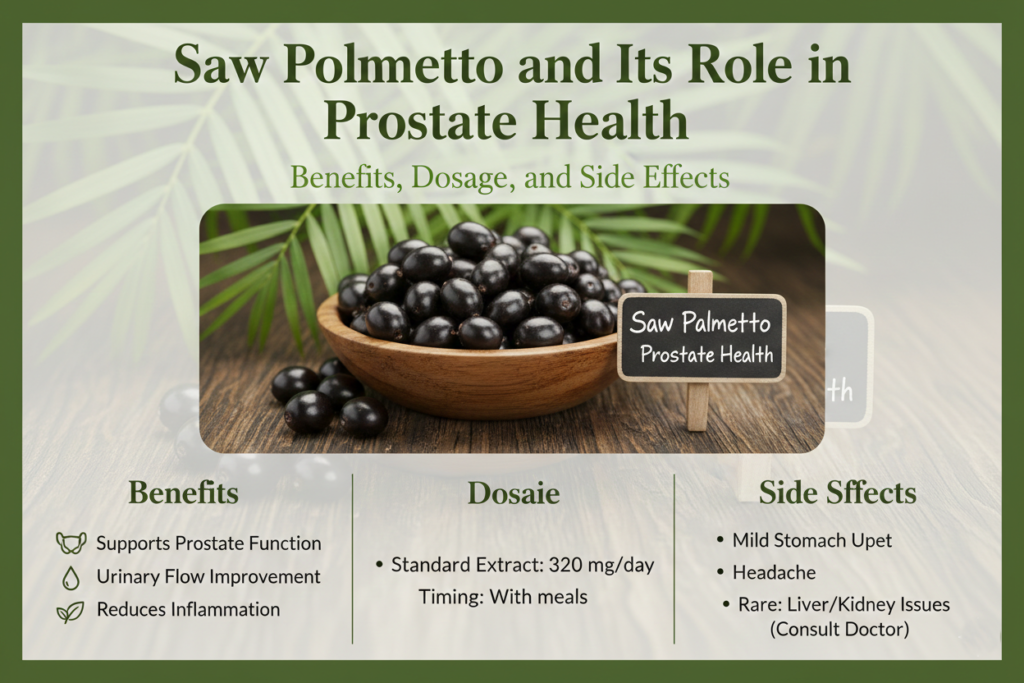
For men dealing with early or mild lower urinary tract symptoms (LUTS), saw palmetto is often one of the first natural options they encounter. It’s widely available, generally well-tolerated, and backed by a long history of traditional use, even if modern large-scale trials have tempered enthusiasm about its standalone efficacy.
2. Science-Backed Benefits of Saw Palmetto for BPH and Urinary Symptoms
The clinical story of saw palmetto is one of honest complexity. Smaller and older trials frequently reported meaningful reductions in IPSS (International Prostate Symptom Score), fewer nighttime bathroom trips, and improved urinary flow. But as research methods have improved, the picture has become more nuanced.
A 2023 Cochrane review, one of the most rigorous in the field, analyzed 27 trials involving over 4,600 men and concluded that saw palmetto resulted in little to no meaningful improvement in urinary symptoms or quality of life compared with placebo. Peak urinary flow (Qmax) improvements, when reported, were typically in the range of 2–3 mL/s and often not statistically distinguishable from placebo response.
That said, certain subgroups of men, particularly those with milder symptoms and those using saw palmetto as part of a multi-herb formula, have shown more favorable outcomes in smaller studies. The takeaway is not that saw palmetto is useless, but that expectations should be calibrated carefully, and that it may contribute more meaningfully as one ingredient among several.
Did You Know? The 2023 Cochrane review of saw palmetto for BPH included 27 randomized controlled trials and over 4,600 participants, making it one of the largest and most rigorous analyses of any single prostate herb to date.
3. How Saw Palmetto Works: Mechanisms Behind the Prostate Connection
Understanding what saw palmetto may be doing inside the body helps explain both its appeal and its limitations. Researchers have proposed several complementary mechanisms:
5-Alpha Reductase Inhibition: The enzyme 5-alpha reductase converts testosterone into dihydrotestosterone (DHT), a hormone strongly associated with prostate tissue growth. Saw palmetto is thought to mildly inhibit this enzyme, potentially reducing the hormonal stimulus for prostate enlargement — though this effect appears weaker in vivo than in laboratory settings.
Anti-Inflammatory Activity: The fatty acids in saw palmetto extract have demonstrated anti-inflammatory properties in cellular studies. Chronic low-grade inflammation is increasingly recognized as a contributing factor to BPH progression and urinary discomfort, making this a relevant mechanistic pathway.
Smooth Muscle Relaxation: Some evidence suggests saw palmetto may help relax the smooth muscle tissue around the urethra and bladder neck, easing the mechanical restriction that causes a weak urine stream and difficulty initiating flow.
While these mechanisms are biologically plausible, it’s important to note that laboratory findings don’t always translate cleanly into clinical outcomes, which is why rigorous human trials remain the gold standard.
4. Clinically Studied Doses of Saw Palmetto
The dose used in the vast majority of clinical research is 320 mg per day of standardized liposterolic extract, containing 85–95% fatty acids and sterols. This is typically taken as a single daily dose or split into 160 mg twice daily. Taking it with food reduces the likelihood of mild digestive discomfort.
Higher doses, up to 960 mg per day, have been tested in trials without producing additional benefit, suggesting that more is not better with this particular extract. The quality and standardization of the extract matter far more than the dose.
For men using comprehensive prostate formulas, saw palmetto is generally included at research-informed levels alongside complementary ingredients. This approach allows for a lower per-ingredient dose while still contributing to a broader multi-pathway effect.
Did You Know? Trials testing doses up to three times the standard 320 mg daily amount found no additional improvement in urinary symptoms, reinforcing that extract quality and combination strategy matter more than simply taking more saw palmetto.
5. Saw Palmetto vs. Other Herbs for Prostate Health
Saw palmetto rarely performs optimally in isolation, which is why understanding how it compares and complements other prostate herbs is so important. Here’s how it stacks up against the most commonly studied botanicals:
| Herb | Primary Focus | How It Pairs With Saw Palmetto |
| Nettle Root | Urinary frequency, urgency, SHBG modulation | Frequently combined, the two herbs may target complementary hormone and inflammatory pathways |
| Pygeum Bark | Urinary flow rate, residual urine, and nocturia | Similar evidence base; pairing addresses both flow and DHT-related mechanisms |
| Pumpkin Seed | Bladder support, zinc delivery, phytosterols | Adds mineral support and plant sterols that reinforce saw palmetto’s anti-inflammatory action |
| Flower Pollen Extract | Prostatitis-type symptoms, smooth muscle tone | Targets irritative symptoms that saw palmetto may not address as well alone |
The consistent theme across prostate herb research is that single-herb approaches tend to produce modest, inconsistent results, while multi-ingredient formulas that combine several botanicals with key micronutrients tend to show broader and more reliable effects.
6. Saw Palmetto in Comprehensive Formulas: Spotlight on Prost-Fix
Why Most Men Choose a Multi-Ingredient Formula Over a Single Herb
Prostate health doesn’t operate through a single pathway. Hormonal shifts, inflammatory signaling, smooth muscle tone, oxidative stress, and nutrient deficiencies all play a role in how the prostate functions over time. No single herb addresses all of these simultaneously, which is the core rationale behind comprehensive prostate formulas.
Prost-Fix: A Research-Guided Formula Built Around Saw Palmetto and More
Prost-Fix is Top Value Supplements™’s flagship prostate support formula, developed under the guidance of medical researcher William Anderson. Rather than relying on saw palmetto alone, Prost-Fix combines it with a carefully selected panel of 30 supportive ingredients, including:
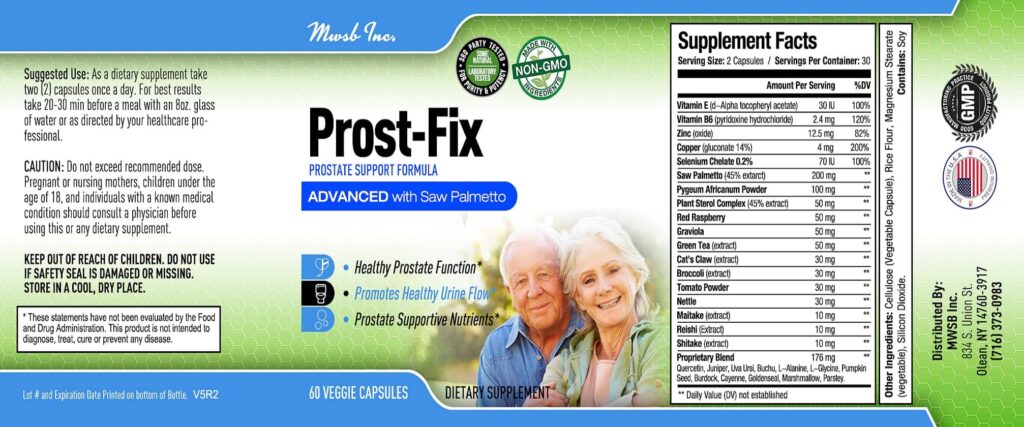
- Flower pollen extract: for smooth muscle relaxation and prostatitis-type relief
- Nettle root: for urinary frequency, urgency, and SHBG modulation
- Pumpkin seed: for phytosterol and zinc delivery
- Quercetin: for antioxidant and anti-inflammatory support
- Zinc, Selenium, and Vitamin B6: for prostate cell function, immune defense, and hormone metabolism
The formula is manufactured in the USA in a cGMP-certified, FDA-registered facility. It is third-party tested, non-GMO, gluten-free, and free of artificial colors and fillers.
Prost-Fix Pricing and Supply Options
| Option | Supply | Price | Notes |
| Prost-Fix – 1 Bottle | 30-day supply | $29.95 | Ideal for first-time users evaluating tolerance and response |
| Prost-Fix – 3 Bottles | 90-day supply | $59.90 | Best value for sustained, multi-month prostate support |
7. Expected Timeline: How Long Before Saw Palmetto Helps?
Patience is important when starting any herbal supplement regimen. In clinical trials, researchers typically track men over periods ranging from 8 weeks to 12 months. Some individuals report subtle improvements, slightly fewer nighttime trips, and an easier start to urination within the first 4–8 weeks.
However, high-certainty reviews suggest that even with extended use, saw palmetto alone may not produce changes that are meaningfully greater than placebo. This is not a reason to abandon the herb, but rather a reason to use it as part of a broader strategy rather than expecting dramatic results on its own within a few weeks.
Men using multi-ingredient formulas like Prost-Fix often report a more consistent experience over 2–3 months, likely because multiple supportive mechanisms are being addressed simultaneously.
8. Safety, Side Effects, and Who Should Avoid Saw Palmetto
One of saw palmetto’s most consistent and well-established attributes is its safety. Across multiple long-term trials, including studies lasting up to three years, saw palmetto has demonstrated a favorable tolerability profile. Side effects, when they do occur, are typically mild and transient:
- Mild digestive discomfort (most common, usually avoided by taking with food)
- Occasional headache or dizziness
- Rarely, minor skin reactions
Importantly, saw palmetto does not appear to interfere with PSA (prostate-specific antigen) test results at standard doses, which is a meaningful advantage over some prescription 5-alpha reductase inhibitors.
Men who should consult a healthcare provider before use include those taking blood-thinning medications, hormone therapies, or anyone with a known allergy to palm species. Saw palmetto is not recommended for women who are pregnant or breastfeeding.
9. How to Choose a Quality Saw Palmetto Product or Formula
Not all saw palmetto supplements are created equal. The difference between a high-quality extract and an underdosed or poorly standardized products can be significant. When evaluating options, look for:
- Standardized liposterolic extract with 85–95% total fatty acids clearly stated on the label
- Softgel or liquid extract form: better absorbed than crude berry powder capsules
- GMP-certified manufacturing in a registered U.S. facility
- Third-party testing for potency and purity
- Transparent labeling: no proprietary blends hiding individual doses
- Non-GMO and allergen-free status where relevant
For men who prefer a one-step approach, a comprehensive formula like Prost-Fix consolidates saw palmetto alongside 29 other researched ingredients, removing the guesswork around combining individual supplements.
10. Integrating Saw Palmetto into a Complete Prostate Health Plan
Saw palmetto, whether used alone or within a comprehensive formula, performs best as one component of a well-rounded prostate health strategy. Practical steps to build that strategy include:
Mediterranean-style diet: rich in tomatoes (lycopene), cruciferous vegetables, healthy fats, and green tea supports a favorable prostate micro-environment from the inside out. Staying well-hydrated while limiting caffeine and alcohol in the evenings can also meaningfully reduce nighttime urinary disruption.
Regular physical activity: particularly aerobic exercise, supports healthy circulation to pelvic tissues and helps maintaia n healthy body weight, which is independently associated with better urinary function. Even 30 minutes of brisk walking most days is a meaningful contribution.
Routine medical oversight: remains essential. Annual PSA monitoring, discussion of urinary symptom scores with your physician, and prompt evaluation of any sudden symptom changes should always be part of the picture. Supplements are supportive tools, not substitutes for medical care.
Conclusion
Saw palmetto has earned its place in the men’s health conversation, not because it’s a dramatic standalone solution, but because it represents a well-tolerated, biologically plausible piece of a broader prostate support puzzle. High-certainty evidence suggests modest standalone effects, but when used as part of a thoughtfully formulated multi-ingredient approach, saw palmetto contributes to a strategy that addresses urinary comfort, hormone balance, and inflammatory signaling together.
For men looking for a convenient, research-guided way to incorporate saw palmetto alongside complementary botanicals and key micronutrients, Prost-Fix offers a clinician-developed formula with transparent ingredients, quality-assured manufacturing, and a 90-day satisfaction guarantee.
As always, discuss your plan with your healthcare provider, especially if you’re experiencing significant urinary symptoms, monitoring PSA, or managing other health conditions.
Key Takeaways
| Question | Answer |
| What is saw palmetto’s primary role? | A standardized berry extract traditionally used to support urinary comfort and hormone balance in men with BPH-type symptoms. |
| Does the science support saw palmetto? | Mixed evidence, modest benefits in some trials, but a 2023 Cochrane review (27 studies, 4,600+ men) found little improvement vs. placebo when used alone. |
| What is the optimal dose? | 320 mg/day of standardized liposterolic extract (85–95% fatty acids), taken with food for best tolerance. |
| Is saw palmetto safe? | Yes — well-tolerated in studies up to 3 years; mild digestive side effects are most common; does not interfere with PSA testing. |
| What formula includes saw palmetto? | Prost-Fix combines saw palmetto with 29 additional ingredients — nettle root, pumpkin seed, flower pollen, quercetin, zinc, selenium, and more — for comprehensive prostate and urinary support. |