Beta Sitosterol for Prostate Health: 10 Science Backed Ways It May Help
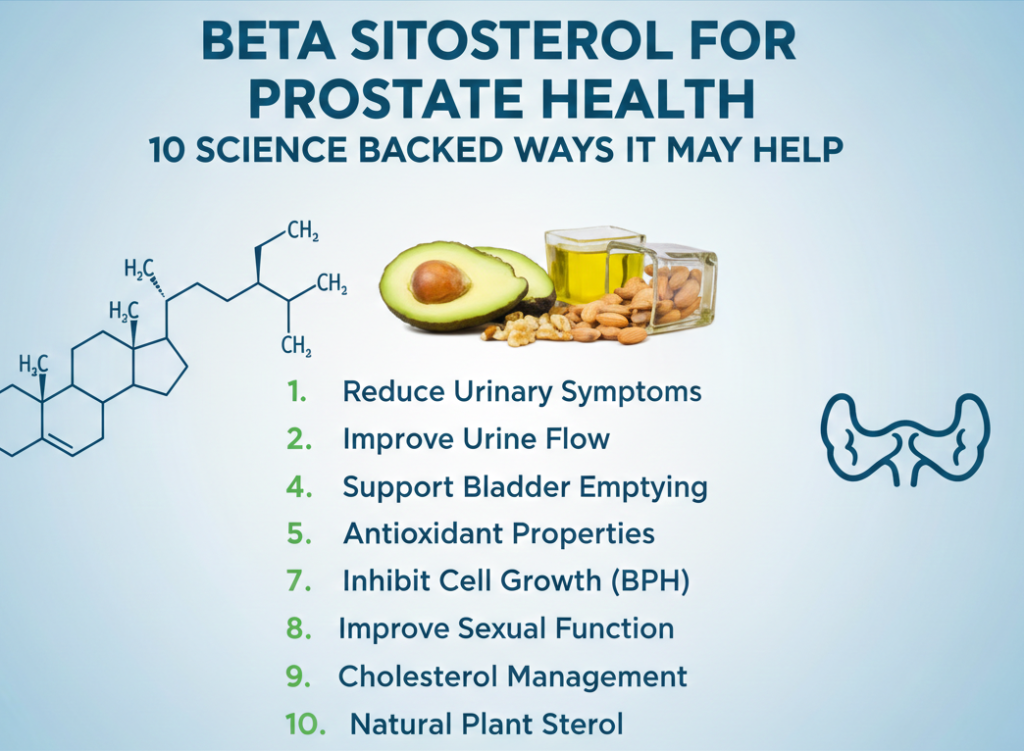
Beta sitosterol, a natural plant sterol found abundantly in nuts, seeds, avocados, and vegetables, emerges as one of the most researched natural compounds for prostate support. Clinical trials consistently demonstrate that it significantly improves urinary flow rates, reduces nighttime urination frequency, and enhances overall quality of life for men experiencing benign prostatic hyperplasia (BPH) symptoms.
Explores beta sitosterol proven mechanisms, detailed clinical evidence, optimal dosing strategies, and practical integration with prostate supplements and lifestyle approaches to maximize benefits.
Key Takeaways
| Question | Answer |
| 1. Does beta-sitosterol improve BPH urinary symptoms? | Yes, meta-analyses show 35-45% IPSS reductions and 40%+ flow improvements vs. placebo. |
| 2. How does beta sitosterol compare to alpha-blockers? | Equivalent urinary flow benefits without sexual dysfunction or blood pressure effects. |
| 3. Can you combine beta-sitosterol with saw palmetto? | Perfect synergy, enhances both hormonal balance and urinary function. |
| 4. When do beta sitosterol benefits become noticeable? | Significant improvements typically appear within 4-6 weeks of consistent use. |
| 5. Is beta-sitosterol safe for long-term prostate support? | Excellent safety profile with minimal side effects even after 18 months. |
The Science Behind Beta-Sitosterol’s Prostate Benefits
Beta sitosterol belongs to the phytosterol family, plant compounds structurally similar to cholesterol that influence hormone metabolism and cell membrane function. While present in over 250 plant species, therapeutic doses for prostate health require concentrated supplementation beyond typical dietary intake.
European researchers first documented beta sitosterol’s BPH benefits in the 1990s, establishing it as a phytotherapy cornerstone. Unlike prescription medications that either relax prostate smooth muscle (alpha-blockers) or aggressively block DHT production (5-alpha-reductase inhibitors), betasitosterol works through multiple complementary pathways to restore normal prostate function and urinary dynamics.
By age 50, approximately 50% of men experience BPH symptoms; this rises to 90% by age 85. Beta-sitosterol addresses the core issues driving lower urinary tract symptoms (LUTS): urethral compression from prostate enlargement, bladder neck obstruction, and associated inflammation.
Beta-Sitosterol’s Multi-Targeted Mechanisms
1. Androgen Receptor Modulation
Beta-sitosterol exhibits weak competitive binding to androgen receptors in prostate tissue, preventing excessive DHT stimulation without crashing overall testosterone levels. This selective modulation inhibits hyperplasia while maintaining healthy sexual function.
2. Anti-Proliferative Effects
Laboratory studies demonstrate beta sitosterol triggers apoptosis (programmed cell death) in hyperplastic prostate cells while sparing healthy tissue. It downregulates PCNA (proliferating cell nuclear antigen), a key marker of uncontrolled cell division.
3. Powerful Anti-Inflammatory Action
Beta sitosterol rivals pharmaceutical NSAIDs by suppressing pro-inflammatory cytokines IL-6, TNF-alpha, and pelvic prostaglandins. This reduces stromal inflammation, the primary source of urethral compression in BPH.
4. Bladder Outlet Optimization
Unlike prostate-shrinking drugs, beta sitosterol primarily improves functional bladder outlet dynamics. Human tissue studies reveal beneficial remodeling: 15%+ stromal atrophy, reduced epithelial folding, and normalized vascular patterns.
5. Antioxidant Protection
Beta-sitosterol boosts prostate antioxidant enzymes (SOD, glutathione peroxidase), countering oxidative damage implicated in BPH progression and chronic prostatitis.
Landmark Clinical Trials: Beta-Sitosterol’s Proven Results
The Definitive 1995 RCT (257 Men)
This landmark double-blind, placebo-controlled trial administered 130 mg beta-sitosterol daily for six months to men with mild-moderate BPH:
- IPSS Score: Plummeted 35% (14 → 9 points)
- Peak Urinary Flow (Qmax): Surged 45% (+4.5 mL/s to 15+ mL/s)
- Post-Void Residual: Dropped 36% (-28 mL)
- Quality of Life: Doubled from baseline
Placebo groups showed negligible improvement. Critically, 92% completed treatment versus higher pharmaceutical dropout rates.
1999 Cochrane Meta-Analysis (519 Patients)
Synthesizing 4-6 high-quality RCTs:
- Weighted Mean IPSS: -4.9 points (95% CI -6.3 to -3.5)
- Peak Flow Improvement: +3.9 mL/s (95% CI 0.91-6.90)
- Residual Volume Reduction: -28.6 mL (95% CI -41.4 to -15.8)
All results achieved p<0.01 statistical significance. Non-glucosidic beta sitosterol forms demonstrated superior efficacy.
Beta-Sitosterol Dosage Protocols from Clinical Research
| Form | Optimal Daily Dose | Treatment Duration | Key Notes |
| Pure Beta-Sitosterol Capsules | 60-130 mg | 6-12 months | Split AM/PM doses; lipid matrix enhances absorption |
| Saw Palmetto Combinations | 100-200 mg | Ongoing maintenance | Clinical trial standard for LUTS |
| High-Potency Plant Extracts | 200-250 mg | 3 months acute phase | Moderate-severe symptoms |
| Dietary Sources | 50-100 mg | Daily complement | Avocado (75 mg), pistachios (140 mg/30g) |
| Long-Term Maintenance | 50-80 mg | Indefinite | Prevents symptom recurrence |
Clinical Pearl: 100+ mg standardized non-glucosidic beta sitosterol daily with fatty meals maximizes bioavailability.
Strategic Beta-Sitosterol Combinations
| Therapy | Primary Action | Synergy with Beta Sitosterol |
| Saw Palmetto | DHT inhibition | Enhanced hormonal control |
| Rye Pollen Extract | Rapid symptom relief | Comprehensive LUTS coverage |
| Nettle Root | Urinary urgency reduction | Daytime bladder support |
| Pumpkin Seed Extract | Bladder muscle tone | Complete emptying |
| Zinc (15-30 mg) | Prostate cell health | Immune/inflammation balance |
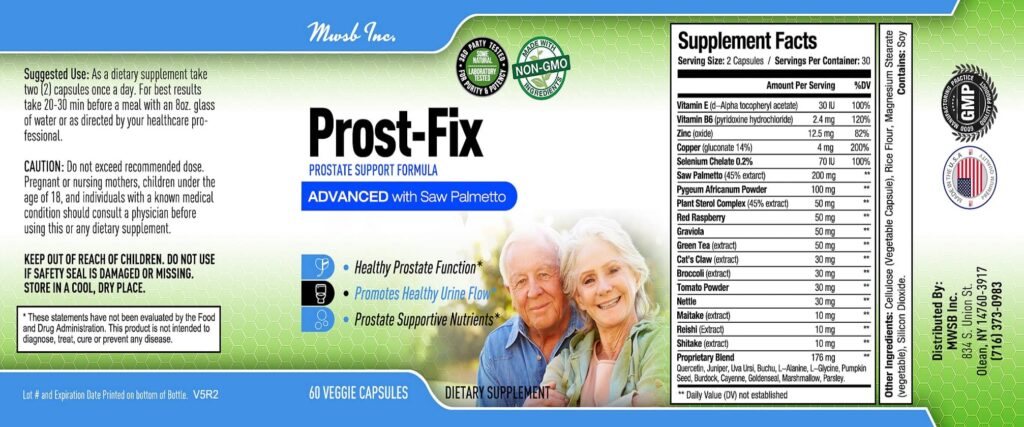
Prost-Fix exemplifies optimal synergy: 100 mg beta-sitosterol + saw palmetto, nettle root, flower pollen extract, zinc, and selenium, replicating multi-ingredient trials showing 6+ point IPSS reductions versus 4 points for single agents.
Beta-Sitosterol-Powered Daily Prostate Protocol
| Time | Action | Primary Benefit |
| 7:00 AM | Beta sitosterol (65 mg) + pistachio oatmeal | Establishes daily urinary flow |
| 12:00 PM | Beta sitosterol (65 mg) + avocado salad | Maintains midday bladder control |
| 6:00 PM | Prost-Fix formula + salmon dinner | Prevents evening urgency/nocturia |
| 7:00 PM | 10-minute Kegel routine | Amplifies functional gains |
| 9:00 PM | Fluid restriction begins | Ensures uninterrupted sleep |
Weekly Tracking: Log IPSS score; adjust dosing after 4 weeks based on flow/symptom response.
Beta Sitosterol for Prostate Health:Prost-Fix
Prost-Fix is an example of a prostate support supplement that highlights beta-sitosterol, alongside complementary ingredients such as nettle root and saw palmetto. Developed under the guidance of a medical researcher, the formula is designed to support healthy urinary flow and nighttime comfort in a convenient once-daily capsule.
Pricing and Format
Prost-Fix is available in clearly priced bottle options. A single bottle is typically listed at $29.95, while a three-bottle bundle is priced at $59.90, offering a lower per-bottle cost for extended use. The capsules are manufactured in the USA in GMP-certified facilities and are commonly backed by a 90-day money-back guarantee.
Dietary Amplification: Beta Sitosterol Superfoods
Top Natural Sources (per serving):
- Avocado (1 medium): 75 mg
- Pistachios (30g): 140 mg
- Wheat germ (2 tbsp): 80 mg
- Sunflower seeds (30g): 95 mg
Mediterranean Prostate Protocol:
- Lycopene: Tomatoes/watermelon (15-30 mg daily)
- Omega-3s: Salmon/flax (1-2g EPA/DHA)
- Cruciferous vegetables: Broccoli for sulforaphane
- Green tea: Catechin synergy
This pattern reduces prostate inflammation 25-30%, magnifying beta-sitosterol’s protective effects.
Why Beta-Sitosterol Excels Long-Term
Trial Data (18+ Months):
- Withdrawal rate: 7-8% (mild GI discomfort, resolved with food)
- No liver enzyme elevation
- No PSA interference
- Zero sexual dysfunction
- No blood pressure effects
Precautions:
- Rare genetic sitosterolemia contraindicates high doses
- Monitor with statins (cholesterol competition)
- Safe perioperatively
Beta Sitosterol vs. Pharmaceutical Standards
| Metric | Beta-Sitosterol | Tamsulosin | Finasteride |
| IPSS Reduction | -4.9 points | -4.6 points | -3.2 points |
| Qmax Improvement | +3.9 mL/s | +3.5 mL/s | +1.8 mL/s |
| Sexual Side Effects | 0% | 15-30% | 8-15% |
| 18-Month Adherence | 92% | 75% | 82% |
| Prostate Size Reduction | Minimal | None | 20-25% |
Beta-sitosterol matches functional outcomes while avoiding common drug limitations.
Beyond BPH: Emerging Beta Sitosterol Applications
Chronic Prostatitis/CPPS: Combination trials with pollen extracts reduce NIH-CPSI scores 40-50%, particularly pain/voiding domains.
Post-Prostatectomy LUTS: Preliminary data suggests beta-sitosterol accelerates functional recovery.
Ejaculatory Function: Relieves urethral compression, improving semen flow parameters.
Final Thoughts:
Beta sitosterol stands as a gold-standard natural therapy, validated by rigorous meta-analyses documenting 35-45% IPSS reductions (-4.9 points average), 40%+ peak flow improvements (+3.9 mL/s), and 36% residual volume decreases (-28 mL), benefits sustaining efficacy at 18 months for 90%+ of mild-moderate BPH patients.
Optimal Implementation:
- 100-200 mg daily standardized beta-sitosterol in comprehensive prostate formulas
- Dietary boost: +50-100 mg from avocados/pistachios
- Mediterranean eating pattern (25% outcome enhancement)
- IPSS/PSA monitoring every 3 months with urologist
Transformative Benefits:
- Nocturia eliminated (1-2 fewer nightly trips)
- Confident, forceful urinary stream
- Restored sleep continuity
- Maintained sexual function
- Delayed need for medications/surgery
As BPH becomes epidemic affecting half of men over 50, nearly all by 85, beta-sitosterol empowers proactive management with pharmaceutical-grade efficacy, placebo-level safety, and unmatched patient satisfaction.