Nettle Root for Prostate Health: What the Science Really Says (Before You Try It)
Many men start noticing urinary changes after 40—more bathroom trips, weaker flow, and restless nights. In fact, a 2025 analysis of 1,210 men found that nettle root significantly improved prostate-related symptoms over up to 12 months, suggesting this traditional herb may be more than just folklore. If you’re curious whether it can actually help your prostate and how to use it safely, this guide walks you through the evidence in clear, practical terms.
Key Takeaways
| Question | Answer |
| 1. What is nettle root and why is it used? | Nettle root (from Urtica dioica) is a traditional herbal remedy studied for benign prostatic hyperplasia (BPH). It may help reduce urinary frequency, urgency, and nighttime urination by influencing hormones and inflammation. |
| 2. Does nettle root really work for BPH? | Randomized trials and a 2025 meta-analysis suggest it can improve standardized BPH symptom scores over months, though researchers note the overall certainty of evidence is still low. It is often used alongside saw palmetto and pygeum. |
| 3. Can it help with nighttime bathroom trips? | Yes, one clinical trial found nettle root reduced nocturnal urination more than placebo over eight weeks. Formulas targeting restful nights often include it for this reason. |
| 4. Is it used alone or in combination? | Most modern supplements pair nettle root with other herbs and nutrients like saw palmetto and beta-sitosterol to address several pathways at once. |
| 5. Is nettle root safe? | Across six randomized trials in a 2025 review, no adverse events were reported. However, men should consult a healthcare provider, especially if taking medications or monitoring PSA. |
| 6. How long does it take to work? | Some benefits appeared within eight weeks in clinical trials. Sustained improvements over 6–12 months were reported in pooled analyses. |
| 7. How do I choose a quality supplement? | Look for clear labeling, standardized extracts, and GMP-certified manufacturing. Multi-ingredient formulas often provide broader support for urinary comfort. |
1. What Is Nettle Root and How Does It Support Prostate Health?
Nettle root comes from the root of the stinging nettle plant, Urtica dioica, long used in European herbal medicine for urinary complaints. Unlike nettle leaf, which is often used for allergies or joint support, the root is specifically studied for benign prostatic hyperplasia (BPH) and lower urinary tract symptoms.
Researchers believe this may influence several drivers of BPH: hormone metabolism (especially how the body handles testosterone and dihydrotestosterone), local inflammation, and interactions with proteins that bind sex hormones. By acting on these pathways, nettle root may help men experience easier flow and fewer disruptive trips to the bathroom.

2. Clinical Evidence: What Studies Say About Nettle Root for BPH
Nettle root isn’t just a traditional remedy; it has been tested in randomized clinical trials.3 One eight-week study in 80 men with BPH compared nettle-root extract (300 mg twice daily) to placebo and tracked common urinary symptoms like frequency and urgency.
Beyond single studies, a 2025 systematic review and meta-analysis gathered data from six randomized trials involving 1,210 men. Overall, nettle root was associated with meaningful improvements in standardized BPH symptom scores over up to 12 months, though scientists caution that study quality varies and more high-quality research is still needed.
3. Nettle Root and Urinary Symptoms: Frequency, Urgency, and Flow
Men living with BPH often notice three main problems: going too often, needing to rush to the bathroom, and feeling like the bladder doesn’t empty fully. In the 2022 randomized trial, eight weeks of nettle-root extract reduced urinary frequency significantly more than placebo, suggesting a real impact on day-to-day comfort.
The same study reported greater reductions in urinary urgency in the nettle group, which matters because urgency is one of the most stressful symptoms men report. While not every man will respond the same way, these findings align with long-standing clinical use of nettle root in Europe for urinary complaints tied to an enlarged prostate.
Did You Know?
Eight-week nettle root extract (300 mg twice daily) reduced urinary frequency more than placebo in a randomized trial of 80 men with BPH (mean changes: -0.50 vs -0.17; p=0.04).
4. Nighttime Bathroom Trips: Can Nettle Root Help You Sleep Better?
Nighttime urination (nocturia) disrupts sleep, drains energy, and affects mood and focus the next day. In clinical research, nettle root has shown a modest but meaningful reduction in nocturia compared with placebo over eight weeks.
While the change was not dramatic, even cutting down by one trip a night can improve sleep quality for many men. This is why nettle root frequently appears in formulas marketed for nighttime comfort and fewer bathroom interruptions.
5. How Nettle Root Affects PSA and Prostate Size
Symptom relief is important, but men and clinicians also look at prostate-specific antigen (PSA) levels and prostate volume on imaging. In the 2022 trial, nettle root did not significantly change PSA or prostate volume over eight weeks, even though urinary symptoms improved.
However, when researchers pooled six trials in the 2025 meta-analysis, they observed an average PSA reduction of about $0.37$ ng/mL across studies. This suggests a potential biomarker effect, though it is not large and may not apply to every individual. Nettle root should not be seen as a replacement for regular PSA monitoring or medical evaluation.
6. Nettle Root in Multi-Herb Prostate Formulas (Including Saw Palmetto)
In practice, nettle root is often combined with other botanicals rather than used alone. Common partners include saw palmetto, pygeum, pumpkin seed oil, and beta-sitosterol—each addressing different aspects of hormone balance, inflammation, and urinary function.
Multi-ingredient formulas are designed so that modest benefits from each plant compound build into a more noticeable overall effect. These blends target healthy flow and comfort through multiple physiological pathways simultaneously.
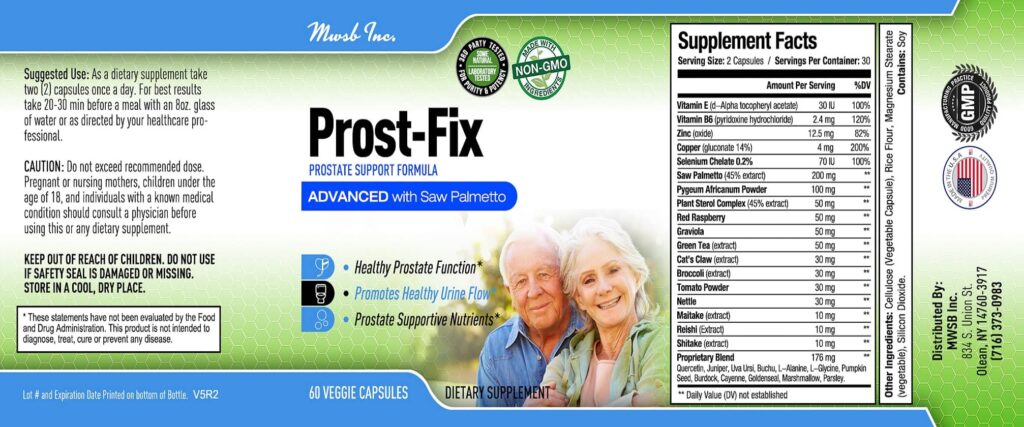
7. Prost-Fix: A Nettle-Root Prostate Formula Example
Research-Guided Blend Featuring Nettle Root
Prost-Fix is an example of a prostate supplement that includes nettle root alongside saw palmetto, beta-sitosterol, and a broad spectrum of additional nutrients. It’s formulated under the guidance of a medical researcher and designed to support healthy urinary flow and nighttime comfort with a once-daily capsule.
Pricing and Format
Prost-Fix is offered in bottle options with transparent pricing. A single bottle is typically listed at $29.95, while a three-bottle option is priced at $59.90, offering per-bottle savings for longer-term use. The capsules are produced in the USA in GMP-certified facilities, often backed by a 90-day money-back guarantee.
Did You Know?
A 2025 systematic review and meta-analysis found 6 randomized trials (n=1,210) suggesting nettle root can improve BPH symptoms measured by IPSS up to 12 months (pooled SMD -2.06; 95% CI -3.22 to -0.91).
8. Safety, Side Effects, and Who Should Avoid Nettle Root
Across six clinical trials included in the 2025 meta-analysis, no adverse events were reported with nettle root, which supports a favorable safety profile in the studied doses and durations. This is reassuring, particularly for older adults who may be taking multiple medications.
That said, men with kidney issues, those on blood thinners, or individuals with known plant allergies should talk with their healthcare provider before starting.It is also important not to use nettle root as a substitute for medical evaluation if you have pain, blood in the urine, or rapid symptom changes.
9. How to Use Nettle Root for Prostate Support
Clinical trials most often use standardized nettle-root extracts. Typical studied doses are in the range of a few hundred milligrams of extract once or twice daily, taken consistently over weeks to months.
Consistency matters: symptom improvements in studies usually appear after several weeks, not overnight. It makes sense to evaluate your response over 2–3 months while staying in touch with your doctor.
10. Comparing Nettle Root to Other Prostate Herbs
| Herb | Main Focus in Prostate Support | Common Use Pattern |
| Nettle Root | Urinary frequency, urgency, and flow. | Frequently combined with saw palmetto. |
| Saw Palmetto | DHT-related mechanisms; supports flow. | Often a “base” herb in prostate formulas. |
| Pygeum | Inflammation and nocturia. | Found in products aimed at nighttime comfort. |
| Pumpkin Seed Oil | General urinary tract and bladder support. | Common in softgel formulas with plant sterols. |
Conclusion
Nettle root has moved from folk remedy to clinically studied herb for men with BPH-related urinary symptoms. Trials and meta-analyses suggest it can reduce frequency, urgency, and nighttime urination for some men, with a favorable safety profile.
On its own, nettle root is not a cure-all, but it can be a meaningful part of a broader strategy that includes other herbs, key nutrients, diet, and lifestyle changes. If you’re considering nettle root, work with your healthcare provider and prioritize products that are research-guided and clearly labeled.