Top 10 Herbs for Prostate Health
Lower urinary tract symptoms (LUTS) such as weak stream, frequent urination, or nighttime bathroom trips affect up to 25% of men in their 50s and as many as 50% of men over 80. With numbers like that, it’s no surprise that many men look to herbs for prostate support, but the real question is which herbs are actually supported by solid evidence, and which ones are mostly tradition and marketing. This guide walks through the top herbs used for prostate health, what human studies really show, and how multi-ingredient formulas like Prost‑Fix bring them together in one practical routine.
Key Takeaways
| Common Question | Concise Answer |
| 1. What are the best herbs for prostate health? | Leading herbs include pygeum, stinging nettle root, saw palmetto, pumpkin seed, flower pollen, beta‑sitosterol‑rich plants, lycopene‑rich botanicals, green tea, quercetin‑containing herbs, and rye grass pollen are best herbs for prostate health. |
| 2. Is one herb enough, or is a blend better? | Studies suggest that individual herbs often offer modest benefits. That’s why multi‑herb formulas like Prost‑Fix combine saw palmetto, nettle root, pumpkin seed, and other botanicals with vitamins and minerals for broader support. |
| 3. Which herb has the strongest evidence for urinary symptom relief? | Among herbs, pygeum africanum has some of the more promising human data on improving International Prostate Symptom Score (IPSS) and urinary flow. |
| 4. Does saw palmetto really work? | Evidence is mixed. Large trials show little difference vs. placebo for urinary symptoms, but it remains a core ingredient in many formulas due to long‑term traditional use and good tolerability. |
| 5. How do herbs fit with vitamins and minerals for prostate health? | Herbs address urinary comfort, hormone metabolism, and inflammation, while key vitamins and essential minerals support antioxidant defense, immune function, and tissue integrity. |
| 6. How do I choose a quality herbal prostate supplement? | Look for standardized extracts, GMP‑certified manufacturing, clear dosing, and a science‑backed ingredient panel. |
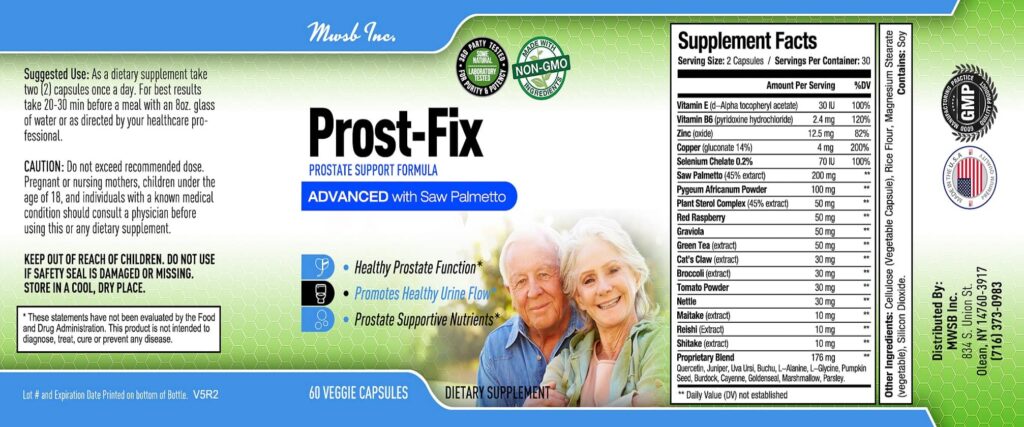
| 7. Where can I get a research‑driven multi‑herb prostate formula? | Prost‑Fix provides 30 ingredients—including saw palmetto, nettle root, pumpkin seed, quercetin, zinc, and more—in one small capsule. |
1. Saw Palmetto: The Most Famous Prostate Herb
Saw palmetto (Serenoa repens) is the best‑known herb for prostate health. Traditionally, its berries have been used to support urinary flow, ease nighttime urination, and maintain healthy hormone metabolism in the prostate.
Modern research, however, paints a nuanced picture. Large randomized trials show that saw palmetto, alone or even at high doses, often performs similarly to placebo for lower urinary tract symptoms. Typical studies use around 320 mg per day of standardized extract, and many men still report some subjective benefit, likely reflecting both placebo response and individual variation.
How Saw Palmetto Is Used Today
Despite the mixed evidence, saw palmetto remains a cornerstone botanical in many men’s formulas because it is well‑tolerated and historically valued. It’s rarely used alone in high‑quality products; instead, it’s paired with complementary herbs and nutrients to broaden potential benefits.
For example, Prost‑Fix uses saw palmetto alongside nettle root, pumpkin seed, quercetin, zinc, and other compounds to support urinary comfort, hormone balance, and antioxidant defense in one daily capsule.
2. Stinging Nettle Root: Herbal Support for Urinary Flow
Stinging nettle root (Urtica dioica) is another widely used herb for prostate and urinary comfort. Unlike the leaf, which is more associated with allergies and detox, the root has been studied for its role in benign prostatic hyperplasia (BPH) symptoms.
In a 12‑month randomized trial, a nettle root extract reduced IPSS from 18.7 to 13.0, while placebo improved from 18.5 to 13.8. The difference was statistically significant but modest—illustrating a common theme with prostate herbs: helpful, but not dramatic on their own.
Why Nettle Root Appears in Modern Formulas
Nettle root is thought to influence sex hormone–binding globulin and inflammatory pathways around the prostate, which may explain its gentle but measurable impact. It’s often combined with saw palmetto in European products as a botanical “pair” for BPH‑type symptoms.
3. Pygeum Africanum: Bark Extract with Promising Human Data
Pygeum africanum (African plum tree bark) stands out among prostate herbs for its relatively strong clinical signal. Multiple trials in men with BPH symptoms have shown improvements in IPSS, urinary flow, and quality of life over several months of use.
In one long‑term study, pygeum extract led to about a 38% improvement in IPSS at 2 months and 46% at 12 months. Peak urinary flow (Qmax) increased by about 15%. These numbers are still modest compared with some prescription drugs but meaningful for many men looking for herbal options.
Did You Know?
Pygeum africanum extract shows meaningful IPSS improvements: about 38% improvement at 2 months and 46% at 12 months, with quality‑of‑life gains around 28% and urinary flow increases of about 15%.
4. Pumpkin Seed: Traditional Support for Bladder Comfort
Pumpkin seed (often as oil or extract) has a long history of use for bladder and prostate comfort. It is naturally rich in zinc, phytosterols, and fatty acids that may support hormone balance and anti‑inflammatory pathways in the lower urinary tract.
Where Pumpkin Seed Shines
Pumpkin seed’s role may be less about dramatic score changes and more about gentle, well‑tolerated support. Its zinc content is particularly relevant for prostate tissue, which concentrates this mineral at higher levels than many other organs.
5. Flower Pollen Extract: Targeting Irritation and Urinary Frequency
Flower pollen extracts are used to support men with prostatitis‑like symptoms and BPH. These extracts provide a complex mix of antioxidants, fatty acids, and phytosterols that may help calm irritation in the prostate and bladder neck.
Several human studies suggest that standardized pollen extracts can reduce urinary frequency and ease discomfort. Because pollen extracts act primarily on inflammation and smooth muscle tone, they pair logically with herbs like saw palmetto and pygeum.
6. Beta‑Sitosterol‑Rich Herbs: Plant Sterols for Symptom Scores
Beta‑sitosterol is a plant sterol found in many herbs and foods. These studies generally show modest but real improvements in IPSS and urinary flow compared with placebo over several months. Beta‑sitosterol appears to influence 5‑alpha reductase activity and inflammatory pathways, somewhat similar to how some prescription drugs work but at a gentler, plant‑based level.
7. Lycopene‑Rich Botanicals: Targeting Oxidative Stress
Lycopene is a carotenoid pigment found in tomatoes. While often discussed as a “nutrient,” it also comes from botanical sources. Observational research links higher lycopene intake with a lower risk of prostate problems over time, likely due to its role in protecting cells from oxidative damage.
Did You Know?
Minimal Clinically Important Difference (MCID) for the International Prostate Symptom Score (IPSS) is about 3 points—meaning men usually need around a 3‑point drop in IPSS to feel a noticeable change in urinary symptoms.
8. Green Tea and Quercetin‑Containing Herbs
Green tea (Camellia sinensis) and quercetin‑rich herbs offer strong antioxidant activity. Quercetin in particular has been studied in men with chronic prostatitis, where it helped reduce pain scores and improve quality of life. By dampening oxidative stress, these botanicals help preserve a healthier micro‑environment inside the prostate.
9. Rye Grass Pollen and Related Extracts
Standardized rye grass pollen extract has a research history in Europe for chronic prostatitis and BPH‑like symptoms. Trials suggest benefits in urinary frequency, nocturia (nighttime urination), and pelvic discomfort. As with most herbs, the effect tends to be steady and moderate.
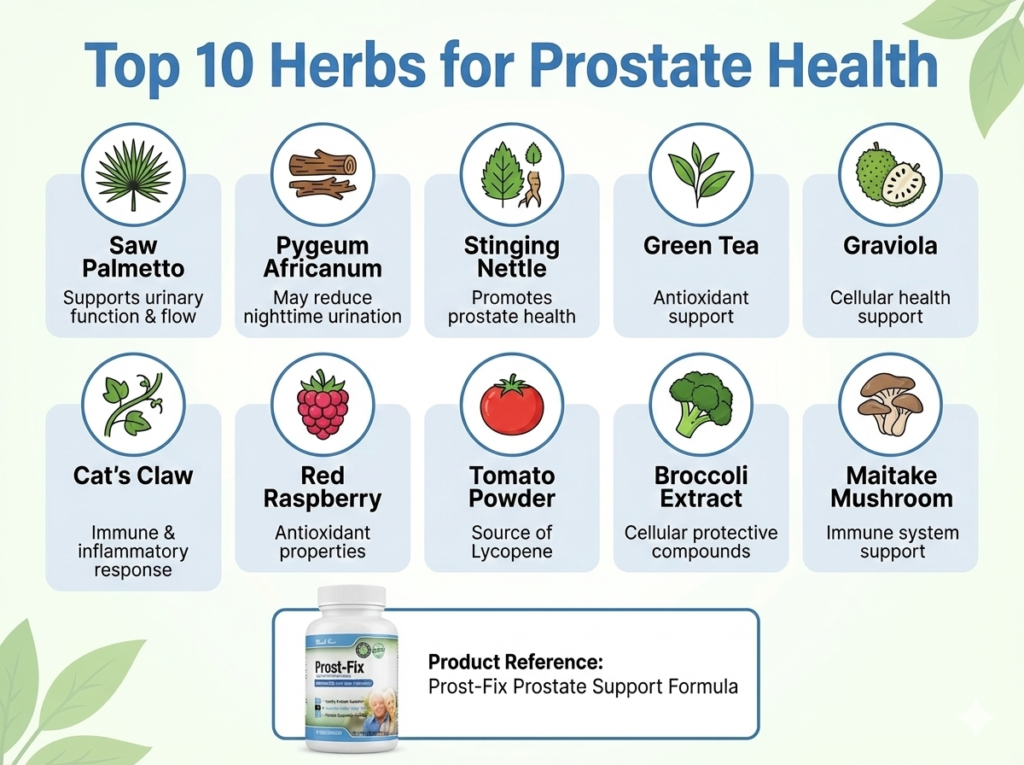
10. Multi‑Herb Formulas Like Prost‑Fix: 30 Ingredients in One Capsule
Because each individual herb usually produces modest improvements, many men prefer comprehensive formulas that combine multiple botanicals with key vitamins and minerals. This is the logic behind Prost‑Fix, developed under the guidance of medical researcher William Anderson.
Prost‑Fix delivers 30 supportive ingredients in one small capsule, including saw palmetto, nettle root, pumpkin seed, flower pollen, quercetin, zinc, and more.
Prost‑Fix Pricing and Supply Options
| Option | Supply Length | Price | Notes |
| Prost‑Fix – 1 Bottle | 30‑day supply | $29.95 | Ideal for first‑time users to assess tolerance. |
| Prost‑Fix – 3 Bottles | 90‑day supply | $59.90 | Best value for consistent, multi‑month support. |
Conclusion
Herbs for prostate health offer real but measured benefits. The research consistently shows that no single herb is a magic solution, and that expectations should be realistic, a few points’ improvement in symptom scores over months, not overnight change.
Before starting any herbal regimen, discuss your plan with a healthcare professional—especially if you have significant symptoms, take medications, or monitor PSA levels. With informed choices and consistent use, herbs can play a valuable supporting role in a broader strategy for prostate comfort and long‑term wellness.