Turmeric & Curcumin for Prostate Health: 10 Powerful Benefits, Risks, and Smart Ways to Use Them
Turmeric and its active compound curcumin have attracted intense interest for prostate health, especially among men looking for natural support alongside medical care. In fact, researchers have already run 34 randomized controlled trials of curcumin or turmeric across different cancers, involving around 2,580 patients, with prostate cancer included among the conditions studied. While the science is still developing, there is enough evidence to take a closer, careful look at how turmeric–curcumin may support the prostate, what to watch out for, and how it may fit alongside researched formulas like Prost-Fix.
Key Takeaways
| Common Question | Concise Answer |
| 1. Can turmeric/curcumin help support prostate health? | Preclinical and early human research suggest curcumin may support healthy inflammatory balance and cell signaling in the prostate, but it should be viewed as a complementary option, not a stand-alone treatment. |
| 2. Is turmeric useful for enlarged prostate or urinary symptoms? | Turmeric is not a primary herb for urinary flow the way saw palmetto or nettle root are, but its inflammation-modulating properties may indirectly support comfort. |
| 3. How does turmeric compare to multi-ingredient prostate formulas? | Single-ingredient turmeric delivers curcuminoids only, while products like Prost-Fix combine herbs, vitamins, and minerals specifically chosen for the urinary tract and prostate. |
| 4. Are vitamins and minerals still important if I take turmeric? | Yes. Nutrients such as zinc, selenium, and vitamin B6 play unique roles in prostate function and hormone balance. |
| 5. What do experts say about natural prostate remedies? | Medical researcher William Anderson emphasizes combining lifestyle changes, targeted supplements, and medical guidance rather than relying on any single herb. |
| 6. How does turmeric fit into natural prostate health plans? | Many men integrate turmeric as one piece of a broader approach that may include multi-herb formulas, dietary shifts, and evidence-based lifestyle steps. |
| 7. Where can I learn more about general prostate health? | For a structured overview of prostate structure, common conditions, and long-term care strategies, see clinical guides on understanding prostate health and relief. |
1. What Are Turmeric and Curcumin, and Why Are Men Looking at Them for Prostate Health?
Turmeric is the bright yellow spice used in many traditional cuisines, while curcumin is the best-known active compound concentrated from turmeric root. Curcumin has been studied for its potential to support normal inflammatory responses, antioxidant capacity, and healthy cell signaling throughout the body.
In prostate health, those same actions are of interest because chronic, low-grade inflammation and oxidative stress often show up in prostate tissue. Men dealing with urinary urgency, weak flow, or frequent nighttime bathroom trips sometimes look at turmeric as a natural way to support comfort alongside more targeted herbs and medical care.
2. How Turmeric–Curcumin Might Support the Prostate
Curcumin appears to influence multiple pathways involved in prostate health. In laboratory and animal studies, it helps regulate inflammatory signaling molecules, supports antioxidant defenses, and interacts with hormone-related pathways that can affect prostate cells.
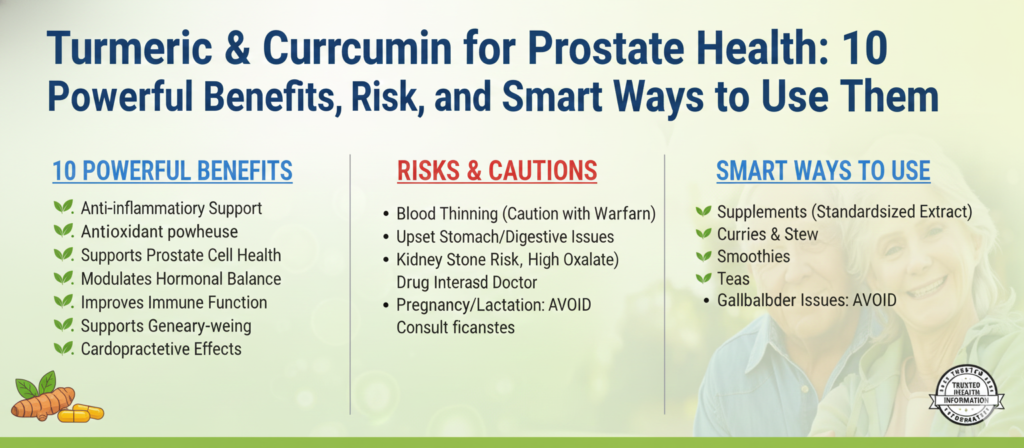
For men, this may translate into potential support for:
- Healthy inflammatory balance in and around the prostate.
- Cellular health and normal cell turnover.
- Overall comfort in the pelvic and urinary regions.
However, turmeric is rarely used alone in real-world prostate support plans. Most evidence-based natural strategies combine curcumin with focused prostate herbs like saw palmetto, nettle root, and flower pollen.
3. What the Research Says: Curcumin and Prostate Health
Research on turmeric–curcumin and prostate health is promising but still early. Animal-model work is especially strong: in one meta-analysis of 17 studies including 263 mouse tumors, curcumin significantly reduced prostate tumor volume and weight, suggesting noteworthy anti-tumor activity in those models.
Human trials are fewer and more varied. Curcumin has been used as a complementary agent in cancer care to study its effect on inflammation, quality of life, and treatment side effects. While some results look encouraging, reviews emphasize that the evidence is not yet strong enough to recommend curcumin as a stand-alone therapy for prostate disease.
Did You Know?
In an animal-model meta-analysis of 17 studies covering 263 mouse prostate tumors, curcumin markedly reduced tumor volume and weight, providing strong preclinical support for its potential role in prostate health.
4. Curcumin, Bioavailability, and Why Formulation Matters
One of the biggest practical challenges with turmeric–curcumin is absorption. Standard curcumin powder is not well absorbed into the bloodstream, and blood levels can remain very low even with higher doses.
To address this, many products now pair curcumin with fats, specialized delivery systems, or absorption helpers like piperine (from black pepper). When looking for a turmeric supplement, pay attention to the delivery method rather than just the milligrams.
| Form | Typical Advantage | Consideration |
| Plain turmeric powder | Affordable; suitable in cooking | Low curcumin content; limited absorption |
| Standard curcumin capsules | Defined curcuminoid dose | Still limited bioavailability without enhancers |
| Enhanced curcumin formulas | Higher short-term blood levels | Often more expensive; variable results |
5. Turmeric vs. Targeted Herbal Blends: Where Prost-Fix Fits In
Turmeric alone is not a comprehensive prostate formula. It does not directly address urinary flow, nighttime urgency, or hormone metabolism the way focused herbs and nutrients do.
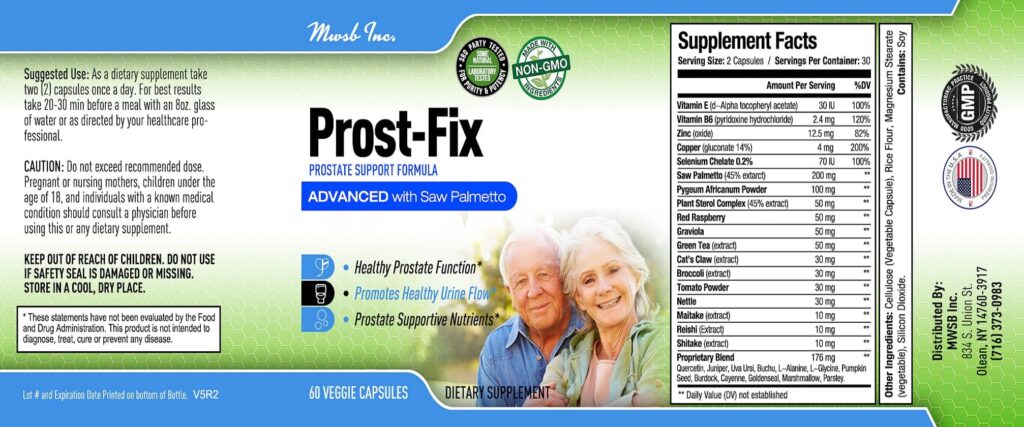
Prost-Fix is a once-daily supplement that brings together saw palmetto, flower pollen extract, nettle root, pumpkin seed, zinc, selenium, and vitamin B6—30 ingredients in total. While Prost-Fix is not a turmeric product, it reflects a research-guided approach: combining multiple nutrients shown to support urinary flow and prostate tissue health. For many men, turmeric–curcumin is layered on top through diet or a separate supplement.
6. Nighttime Bathroom Trips: Turmeric’s Role vs. Proven Formulas
Frequent nighttime urination (nocturia) is one of the most frustrating prostate-related complaints. Turmeric–curcumin may support comfort by addressing inflammation, but it has not been specifically designed as a stand-alone solution for nighttime trips.
In contrast, formulas like Prost-Fix use saw palmetto and pumpkin seed specifically to target urinary flow and bladder comfort. In practice:
- Primary support: Multi-ingredient prostate formulas for flow.
- Complementary support: Turmeric–curcumin for systemic inflammatory balance.
7. Turmeric in the Context of Other Prostate Herbs
When you look at the core herbs used in prostate support, turmeric is usually a supporting player beside:
- Saw Palmetto: Used to support healthy DHT activity.
- Nettle Root: Often paired with saw palmetto to support hormone binding.
- Flower Pollen: Targeted for pelvic comfort and urinary mechanics.
Turmeric–curcumin complements these by providing whole-body inflammatory and antioxidant support.
8. Safety, Side Effects, and Quality Concerns
For most people, culinary turmeric is very safe. However, concentrated supplements require care:
- Digestive Upset: High doses can cause stomach issues.
- Liver Health: Rare reports of liver injury have prompted safety alerts; always monitor for jaundice or dark urine.
- Product Quality: Over a third of turmeric supplements may not clearly disclose their active curcuminoid content.
Practical Safety Tips:
- Use under medical supervision if you have liver disease or take blood thinners.
- Choose brands that state exact curcumin oid content.
- Stop use if you experience unexplained fatigue or yellowing of the skin/eyes.
9. How Much Turmeric or Curcumin Do Men Commonly Use?
There is no single “prostate dose,” but general literature often cites:
- Starting Point: 500 mg daily of curcuminoids.
- Therapeutic Protocols: Up to 1,500 mg in divided doses (only under clinical guidance).
Working with a clinician is essential for older men managing blood pressure, heart conditions, or diabetes.
| Use Scenario | Approach |
| General Wellness | Emphasis on diet (cooking with turmeric) + low-dose supplements. |
| Complementary Use | Carefully supervised dosing coordinated with urology teams. |
| History of Liver Disease | Very cautious use or complete avoidance. |
10. Building a Prostate-Smart Plan
Turmeric–curcumin is most effective when it sits inside a “prostate-smart” lifestyle:
- Nutrient-Dense Diet: Plenty of vegetables and healthy fats.
- Weight Management: To support hormone balance and circulation.
- Targeted Nutrients: Including zinc, selenium, and saw palmetto.
- Regular Screenings: Consistent checkups with a healthcare provider.
Conclusion
Turmeric and curcumin offer a research-supported way to support healthy inflammation and cell signaling. While animal studies are promising, curcumin remains a complementary tool, not a replacement for medical care. For the best results, combine a healthy lifestyle with well-designed supplements that address the prostate’s specific mechanical and hormonal needs.